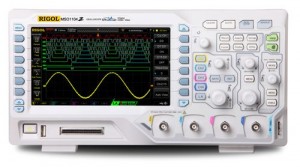
MSO1104Z

Oscilloscopes are the most critical tool when it comes to debug and analysis of electronic circuits.  In recent years, digital oscilloscopes finally surpassed their analog equivalents.  (10 years ago I would still make an argument for analog, but not anymore.)

The most innovative change to digital scopes came with “Mixed Signal Scopes.”  In addition to the high-resolution analog channels, you get 16+ digital channels time-correlated.  Digital channel in this context means only seeing a 0 or 1, kind of like a logic analyzer.

Rigol’s MSO1104Z combined 100MHz of Analog Performance on 4 channels along with 16 Digital Channels for $1000 (MSRP: $997) USD!  That’s an amazing package.  Full specs and Quote request available here.
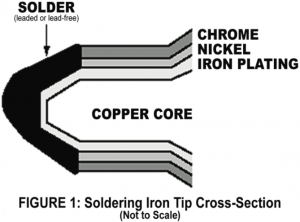
After mentioning how much I like using a brass sponge when soldering, I came across this App Note from OK International.  This is a great note to read through.  It discusses what is inside of a soldering iron tip, why they fail, and how to keep them in good shape.

Layers of a Soldering Iron Tip
Image from OK International’s Tech Note

The note actually makes me realize two of my own mistakes.

First, most cleaning should be done with a wet sponge not the brass sponge.  (Oops!)

Second, pre-made tip tinners are meant for occasional cleaning.  Moving forward I think I’ll modify my soldering behavior so that I start with a quick clean in the brass, use the sponge while working on a board, and then use standard solder to protect the tip when done.

What other tips (no pun intended) can you think of for soldering tips?

From Jan 1 2014 until today, baldengineer.com’s traffic has increased 150%.  With so many new readers, I thought about how to make better posts for you.  That lead me to look at the top posts in 2014. Below are the most viewed posts from the past year, plus some honorable mentions.

Top 10 Posts from 2014

  1. 5 Myths Everyone Believes about Arduino (that aren’t true)
  2. millis() Tutorial: Arduino Multitasking
  3. Arduino: How do you reset millis() ?
  4. MSGEQ7 Simple Spectrum Analyzer
  5. When do you use the Arduino’s Serial.flush()?
  6. Arduino: Sending and Receiving Multi-Digit Integers
  7. Arduino Internal Pull-Up
  8. LED Basics
  9. Open Vapors – Open Source Toaster Reflow Oven – Overview
  10. Alternatives to Arduino’s Serial Monitor

Keep your soldering iron tip from oxidizing.

As it gets dull and gray, it’ll be harder to make good solder joints. My favorite tool to clean a tip is a Brass Sponge. The other option is a damp cellulose sponge, but I’m not a fan of those.

I have just never found a sponge gets the tip as clean as a light dabbing from the brass sponge.

Just be careful not to “scrub” too hard, you don’t want to scratch the tip. When you done soldering, make sure you clean it with the sponge then coat the tip with fresh solder. Leave that solder on the tip until the next time you use it. The layer of solder will prevent oxidation from building up while the iron sits unused.