When you start creating your own parts in EAGLE, you’re going to want to store them somewhere. Here’s how to setup EAGLE to use custom directories and how to create your own Library, which gets stored in the custom directory. There are a number of steps involved, but once setup custom libraries give you a place to store components you create as well as the ability to copy other parts into your library.
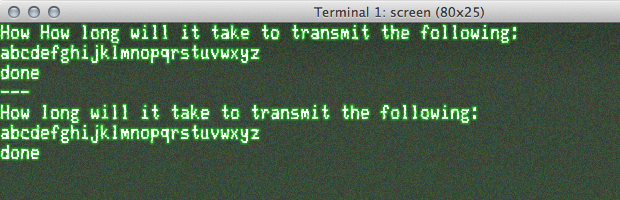
In the Arduino library, the Serial object has a method called “flush().” Often users go throwing it into programs without fully understanding what it does. It doesn’t help that it’s functionality changed when version 1.0 of the Arduino IDE was released.
Does Serial.flush() affect the Transmit Buffer or the Receive Buffer and when do you need to use it?
Having spent the past 6 years writing code for the Arduino platform, I’ve noticed a trend in myths from both newcomers and veteran users. Here are the Top 5 Myths I see come up on forums, in classes, and on IRC.
Getting started with electronics always involves a discussion of Ohm’s Law. What is this mysterious sounding law and how can you use it when building electronic projects? One the main uses for Ohm’s Law in your projects is to calculate the resistor value needed for a LED. This article takes a look at what Ohm’s Law is and how to use it with LEDs.
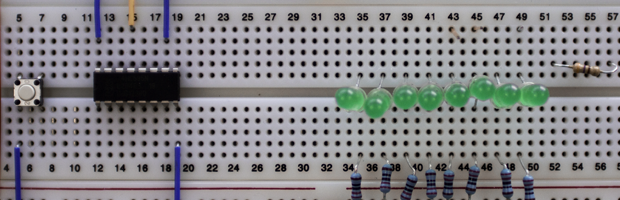
Soldering every circuit you build probably isn’t practical. At some point you are probably going to want to use some type of temporary method to connect different components together. One of the popular methods is using a breadboard. This simple (and cool) looking device only needs a few instructions before you can begin