Category

Tutorials

Category

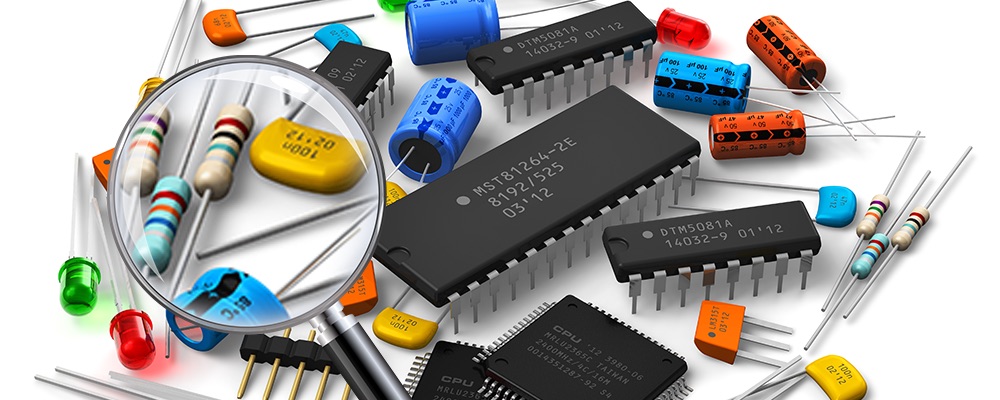
What part is the most important part in building a project? All of them! Okay, bad joke. Selecting the right parts or components for a design is an area where both new hobbyist and veteran engineers struggle. The wide variety of devices make it almost impossible to know if you are selecting the right one.

Looking at a curated List, using component search engines and browsing DIY shops are how I tend to find parts for my projects.

You might want to bookmark these some of these sites so you can use them next time you’re stuck on how to find parts for your project.
4 keys to getting electronics help for your project

When describing a person, do you ever use the phrase “their strength is their weakness?” That’s how I feel about Internet forums. The strength of forums is the collective knowledge of like-minded people, some with more experience than others. Sadly, that is also the weakness of Internet forums… Whether it is a topic-specific site like the EEVBlog Forum or an almost anything site like Reddit the strength/weakness holds true.

Lucky for us, most engineering-focus forums are a positive place to ask question and get electronics help.

If you ask better questions, you can get better answers. So, here are  4 proven tips to help ask better questions, when looking for electronics help.

Tutorial on schematics basics

The funny thing about schematics is that they are much easier to draw than they are to read. There are many common circuits. When an experienced engineer looks at them, it’s like a second language. When someone less experienced looks at them, it looks like random lines and symbols thrown together at the last-minute. (Or maybe that’s just the schematics *I* draw.)

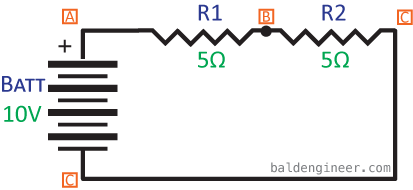
Other than reading Schematic Symbols themselves, one of the basic skill necessary to read a schematic is recognizing series and parallel circuits.

In short if the same current flows through all the parts, they are in series.  While if current has different paths, they are in parallel.  Keep reading to dive into this tutorial on how ohm’s law applies to series and parallel circuits.

How to blink (or flash) a LED without delay() and detect button pushes

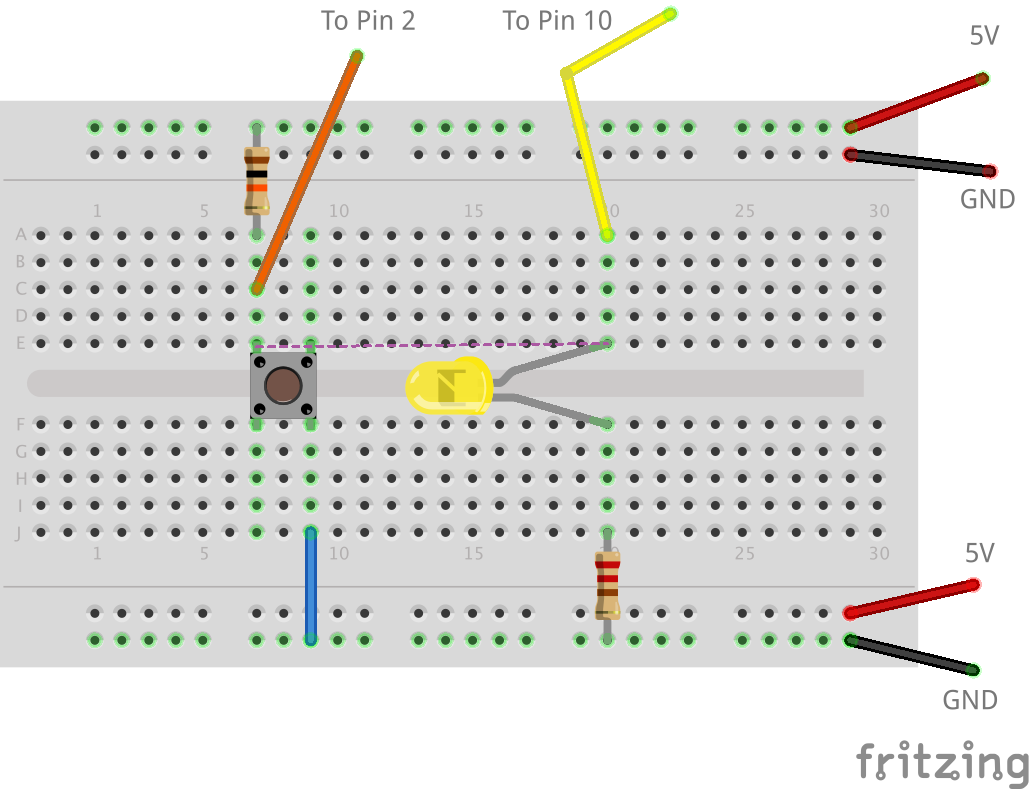
One of the limitations of the delay() function is that nothing else can really be done. This presents a problem when you want to flash a LED while waiting for a pushbutton to be pressed.

Flashing the LED with millis() and using a flag variable to find if the LED should be flashing solves this problem.

Consider this another example to my virtual millis() cookbook.

This code (below) should work with both Arduino (AVR) and Energia (supported boards), but to be honest, I haven’t had a chance to test it on my MSP430 yet.

Learning to a breadboard is critical when adding electronics to a project. A skill often overlooked is how to use breadboard jumper wires correctly. For example, when I breadboard a circuit I only use Red, Green, or Blue for positive voltages and Black for ground. Other colors, it depends on the functions of the wire. The idea is to keep it clear when I look at the board, what each wire is doing.

This video from Make is a great overview of how to develop a skill, or habit, around using breadboard jumper wires in your circuit.

For more information, there is a short writeup on their web site as well.