Minecraft animation from PoetPlays.
Happy Holidays Everyone.

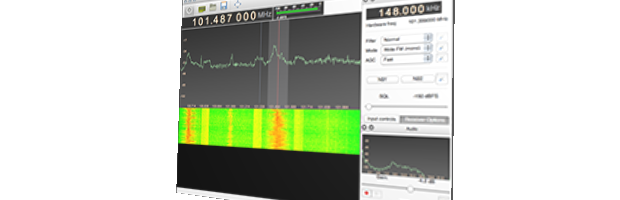
Early in my engineering career, I worked for an oscilloscope company in the high performance product line. The last project I worked on was defining the features and requirements of a 33GHz (that’s giga-, not mega-) scope. This experience gave me a strong appreciation for processing digitized signals, especially those in the RF range. So when I picked up my first Software Defined Radio (SDR), you can imagine how much fun it was to use… with the help of some open source hardware.
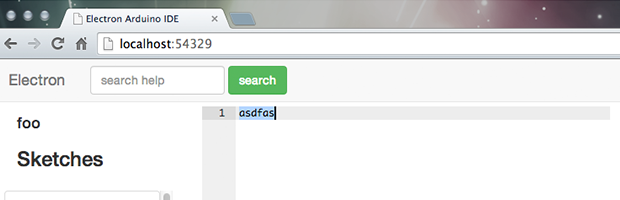
The Arduino IDE is great in that with a single download on any PC platform, new users can start writing code and see immediate results. The same simplicity though, limits some of the more “advanced” features found in modern editors. Also one of the IDE’s greatest strengths is cross-platform through Java. This is also one of its weaknesses. Java is outdated and it’s time to move on.
There’s a slew of other Arduino development environments out there, but most of them are limited to 1 or 2 platforms. Electron is a novel idea because it is based on Node.js, meaning it runs in Google’s Chrome.
The initial implementation even includes a Serial monitor!
I want to make my blog a better for your interests. That means, I need to know about YOU!
Would you please take a few minutes and answer a few questions? By doing so, you’ll actually be helping yourself. How? Because I’ll be able to make better content and more posts that are relevant to you.

One of the recent changes in pop-culture is that “nerds are cool.” Most people who claim to be a nerd like to wear 1950s (non-corrective) glasses and download Apps on their iPhone. Some go farther and say they’re engineers. Here’s how you can sort out the posers.
The original author for this test is unknown. A quick Google search comes up with a number of duplicates, but no one claiming to be the author. So, republished with my own comments (and slight edits) is, the “Engineer Identification Test.”