Author

James Lewis

Browsing

Last Update:  09/24/2013

Status:  Done

Github:  https://github.com/baldengineer/Mixed-Signal-Oscilloscope-Demo-Board

Abstract

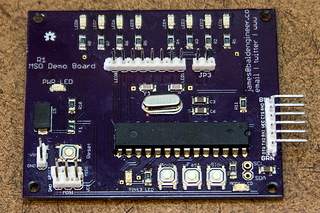
As a member of the TechShop in Austin, TX I teach a class on Electronics Measurements.  The class includes a variety of test equipment like power supplies, DMMs, and Rigol oscilloscopes.  One of the oscilloscopes is a Rigol DS1052D which is a “Mixed Signal Oscilloscope.”  In addition to the two 100MHz analog channels, the scope also include 16 digital channel channels.  It is a logic analyzer and oscilloscope in one!
The following resources compliment my EAGLE Introduction Classes and eBook.  Files mentioned in those resources will be provided here, although, the original creators may have newer versions available.

EAGLE Tutorials

These are EAGLE tutorials I have created.  There is a mix of written and video content.

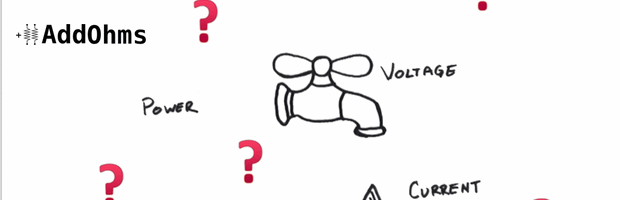
Starting with this new AddOhms TutorialCast series, we are taking a look at Electronics Basics.  The first topic is on the differences between Voltage, Current, and Power. The twist on this explanation is that we are not using the usual “electricity is like water” analogy engineers seem to love.  Instead, we just use plain language to explain the difference between these concepts.

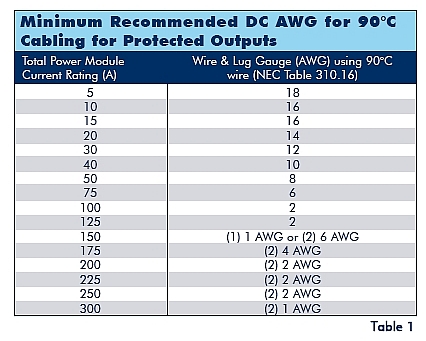
In an ideal world, wires would be ideal.  They’d have no resistance, and therefore, no voltage drop.  As we all know, our world is far from ideal which means so are our wires.  While copper is an excellent conductor, it does have some resistance associated with it.

This means when designing DC circuits, very common in the hobby world, you may need to take into account the size of the wire you’re using.

David Norton at EDN has put together an excellent primer titled:  What size and type of output wires should I use?.  Give it a read, bookmark it, and if you use Evernote like me, clip it.

Over the past several months I have been kicking around a new way to teach non-engineers about electronics.  My idea is to use simple language to explain complex engineering subjects.  Each video will be in the range of 3-5 minutes.  While putting together the first couple of topics I started to realize I wanted this to be something to stand on its own.