Category

Tutorials

Category

If you’re making your own PCB with the toner transfer method, you might find that getting nice clean ground planes is difficult. John on twitter (@johngineer) realized a simple, but effective method.

john_diy_pcb_tip

Use a hatch pattern for your planes and then fill in the squares with a Sharpie. Simple, but effective. The paper detaches easier and the etch comes out cleaner.

For help on creating ground planes in EAGLE, check out this video tutorial I put together.

What happens when you have a random chip or sensor you want to interface with an Arduino, but don’t know how? You search for a pre-existing library of course. And where are many libraries hosted and available from?  A place where eager developers hack together code, post updates, and collaborate with others: Github!

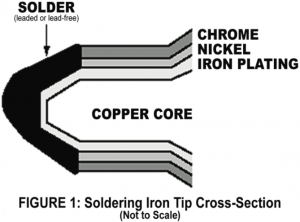
After mentioning how much I like using a brass sponge when soldering, I came across this App Note from OK International.  This is a great note to read through.  It discusses what is inside of a soldering iron tip, why they fail, and how to keep them in good shape.

Layers of a Soldering Iron Tip
Image from OK International’s Tech Note

The note actually makes me realize two of my own mistakes.

First, most cleaning should be done with a wet sponge not the brass sponge.  (Oops!)

Second, pre-made tip tinners are meant for occasional cleaning.  Moving forward I think I’ll modify my soldering behavior so that I start with a quick clean in the brass, use the sponge while working on a board, and then use standard solder to protect the tip when done.

What other tips (no pun intended) can you think of for soldering tips?

Keep your soldering iron tip from oxidizing.

As it gets dull and gray, it’ll be harder to make good solder joints. My favorite tool to clean a tip is a Brass Sponge. The other option is a damp cellulose sponge, but I’m not a fan of those.

I have just never found a sponge gets the tip as clean as a light dabbing from the brass sponge.

Just be careful not to “scrub” too hard, you don’t want to scratch the tip. When you done soldering, make sure you clean it with the sponge then coat the tip with fresh solder. Leave that solder on the tip until the next time you use it. The layer of solder will prevent oxidation from building up while the iron sits unused.

Let me start by saying, this book is not for new comers, or (ugh) “newbies”, to electronics.  This book is intended for those who have a solid understanding of electrical engineering fundamentals, but want to expand to the next level.  Bogatin’s amount of detail is on-par with a textbook but writing style is more casual.

Understanding signal integrity use to be “Black Magic.”  It is taught in a language which resembles engineering speak, but sounds like randomly assembled terms purposefully meant to confuse people.  Personally, I remember hearing “signal integrity engineers talk” and wondered if they were speaking in code.

Review: 5 out of 5