Author

James Lewis

Browsing

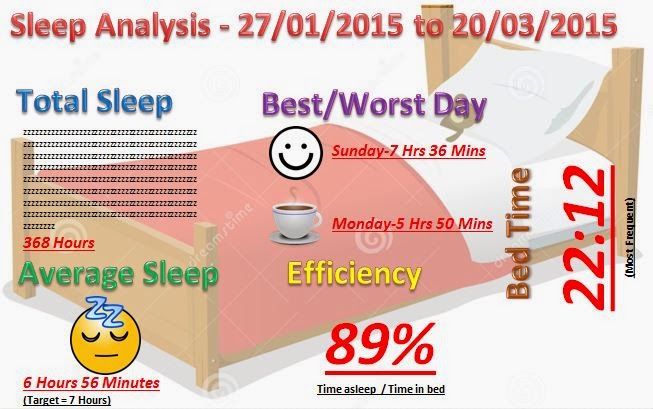
sleep_raspberrypi_infographic

The Fitbit API allows you to get data from a Fitbit and use it in your own applications.

Paul wrote a Python script which runs on his Raspberry Pi which extracts the data. Then we processes the data using Excel. Once doing so, he created the above sleep infographic–his first effort.

The interesting aspect here, to me, is the idea of these wearable devices and their data. It is great we have large-scale data creation, but it is even better have access to the data for processing.

Great example of charting out critical health data using easily accessible tools.  Check out Paul’s full writeup with description and code.
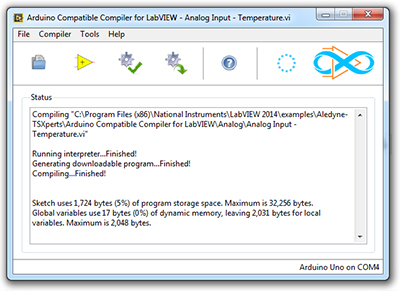
Arduino Compiler for LabVIEW Screenshot

Aledyne-TSXperts, a National Instruments Alliance Partner, has released an Arduino compiler for NI’s LabVIEW. Now it is possible to build a VI and download it into your Arduino.

The price tags from $99 to $499 might seem a bit high to the average hobbyist. However, at least it comes with a 7-day evaluation period. It is also compatible with the Home Edition of LabVIEW.

So if you’re a LabVIEW programmer with an Arduino on your desk, you might want to checkout the Arduino Compiler for LabVIEW.

National Instruments changed the world of instrumentation when it released the VirtualBench. For about $2000 (USD), they give you a bench’s worth of equipment in a box about the size of Horowitz’s The Art of Electronics!  In this video review, I take a look at the VirtualBench’s 6 built-in functions.

This is a follow-up to my written review of the Virtual Bench. I use the same mixed signal oscilloscope (MSO) demo board, to point out what I like and don’t like about the VirtualBench.

VirtualBench Review Jump Points

Here are jump points to specific parts in the review.
Overall, I like the box and I think you’ll see why.  The iPad App is amazing.  The specs are impressive.  And overall, the instrument works well.

Not to long ago the only question about embedded boards was: Arduino or Raspberry Pi. Which really breaks the question down to “microcontroller” or “microprocessor.” Once you decide on a microprocessor platform, there are a bunch of Raspberry Pi Alternatives to consider.

Of course, no single board will always be the obvious “best.” Heck I’ve even got a pile of them on my bench that I haven’t messed with yet.

The 5 Raspberry Pi Alternatives

Even though I haven’t gotten to them all yet, Christian Cawley at makeuseof put together a nice list of Raspberry Pi Alternatives. So before you dive head first into your project, check out these other boards and see if one better meets your needs.

  1. Beaglebone Black
  2. ODroid-C1
  3. Hummingboard-i1
  4. Minnowboard Max
  5. Banana Pi

Even if you aren’t in the market for a new microprocessor board, you might want to check out the first section of the article. It’s a nice description of what to look for when selecting a board.