Author

James Lewis

Browsing

Adding WiFi to any project can be difficult. There are a few off the shelf options that make it easier. One option is the official Arduino WiFi shield. This full-featured shield uses its integrated microcontroller to handle the WiFi protocol, security, and the TCP/IP stack for you. From “plug it in and go” perspective, this is an awesome option for Arduino-based projects. Plenty of example code supports the nicely designed hardware. The main downside to some people is the price.

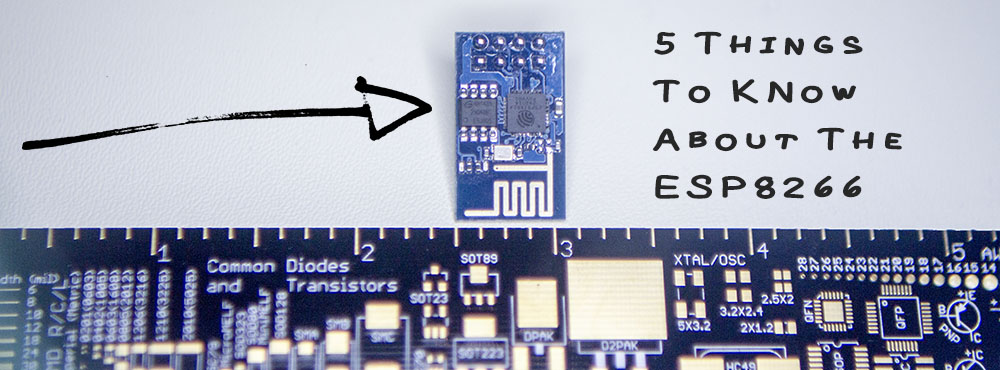
The more popular option these days is the ESP8266, typically advertised around $5US. They are about the size of a TO-220 packaged transistor. How do they get so small? Using a technology known as “System On a Chip”, or SOC, these tiny modules pack everything on the Arduino WiFi shield inside of a single chip! SOCs are great when space is limited. If production volumes are high enough, there can even be a cost advantage.

After spending some time with an ESP8266 I bought on eBay (which I don’t recommend..), I’ve found some things you need to know before building your ESP8266 based project.


The Martian by Andy Weir is an engineer’s dream story. The story opens with Mark Watney being stranded on Mars after an accident occurs. The book is a collection of his daily logs on the Martian surface, chronicling the measures he takes to stay alive.

Rarely do I read a fiction book so well thought out, I start solving the problems along with the characters.  Midway through I was excited because I would see Mark’s solution as one of the possible answers in my head. I also found myself invested in what happens to Mark. He is a likeable guy and, at least for me, easily relatable.

One cliché I didn’t care for was the “evil” mission control characters. NASA has struck me as an organization that is pretty level-headed, with most of its decision makers have some engineering background. A few times it seems mission control has lost their mind–like you see in poorly written movies.

That flaw is pretty minor, though, especially compared to the quality of the overall writing.

If you are someone who has a passion for space exploration, interest in going to Mars, and an engineer: The Martian by Andy Weir is a must-read.

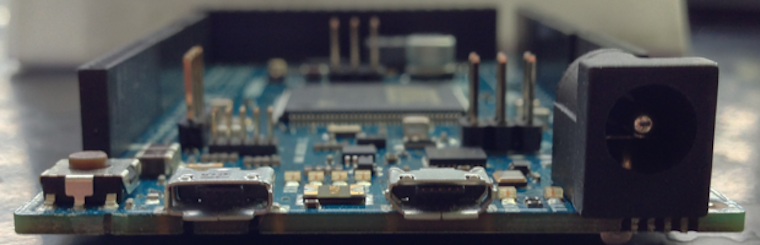
When you hear the name “Arduino,” does a picture of the Uno come to mind? While the most popular, this 8-bit based board isn’t the only Arduino available today. There are some other boards available like the Due and recently introduced Zero, which are far more advanced than the humble Uno.

These are 32-bit microcontroller boards that have a very different architecture compared to the relatively straightforward Uno. In fact, one of the most striking differences is that the Due and Zero have two USB ports.

What is the difference between the Programming and Native ports on these more powerful Arduino boards?

r-2r matrix illustration

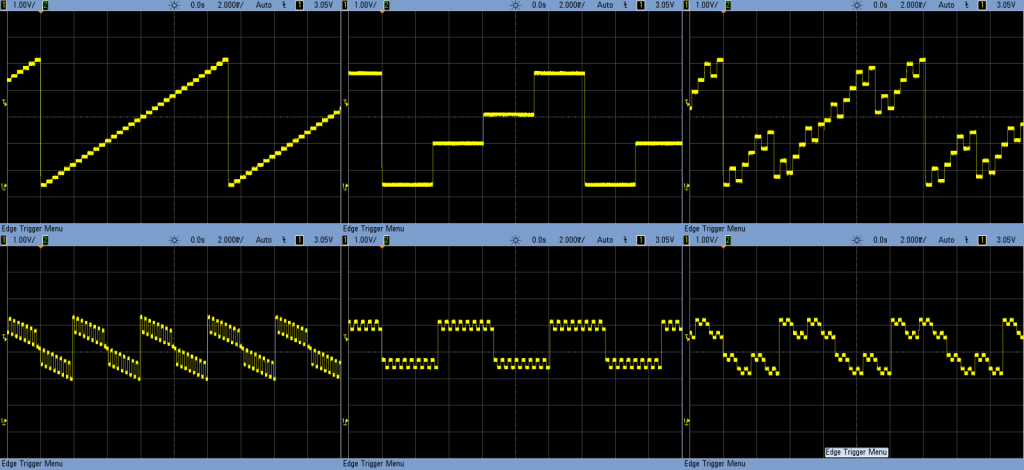
Creating real analog outputs from a digital pin is possible when you use an R-2R DAC. What is a DAC? The letters stand for Digital to Analog Converter. This simple DAC is built using resistor. The principle works on voltage dividers. By enabling different combinations of resistors, it is possible to get various voltage levels.

Obviously, such a simple design will have some trade-offs.

The resolution depends on how many resistor steps you include. That is why discrete R-2R networks built on a breadboard have a staggered look. You could add more levels to smooth it out, or there are other options.

This R-2R Logic Noise Post talks about how they work in detail and even includes a section on filtering the output to be less “stepped.”