Author

James Lewis

Browsing

What are aluminum polymer capacitors? These are a solid type of capacitor that replaces the liquid electrolyte with a solid polymer material. Sometimes you might hear these capacitors called “organic aluminum.” Technically, they are still “electrolytic” capacitors. However, the colloquial term of “aluminum electrolytic” refers to the traditional wet electrolyte-based capacitors.

In this video, I meet with Amelia Dalton of EE Journal, and we discuss these capacitor types. Mouser and EE Journal developed the video in joint with KEMET. (Previously I talked on Amelia’s Chalk Talk about SSD Capacitors.)

For me, the release of this video is bittersweet. It is one of my last projects before my departure from KEMET. However, I am excited to talk about aluminum polymer capacitors because they represent one of the “newer” technologies when it comes to capacitors.

Difference between Aluminum Polymer Capacitors and Aluminum Electrolytics

As mentioned, the key difference between the capacitor types is the electrolyte. In a traditional aluminum electrolytic, there is an electrolyte that connects the cathode plate of the capacitor to the cathode electrode. In a polymer capacitor, a solid conductive polymer material replaces the wet electrolyte. The most common polymer material is PEDOT. The use of this material provides an exceptionally low ESR which makes the capacitors can handle more ripple current. Also, because there is no electrolyte to “dry up” or “wear out,” the operational lifetime of these capacitors is much longer. Overall, aluminum polymer capacitors are an excellent alternative to traditional electrolytics.

Learn about Aluminum Polymer Capacitors
Can you use voltage dividers as regulators? What if you add a Zener Diode? In this AddOhms episode, I show what happens when you try to power a complex circuit like an ESP8266 with a voltage divider instead of a regulator. (Spoiler: Get a voltage regulator.) This video tutorial is related to a write up I did recently on Zener Diodes. For questions or comments visit the AddOhms Discussion Forum.

Behind the scenes

A significant change for this AddOhms Episode is that I moved from Final Cut Pro X to Premiere Pro. I also shot the entire video in 4K, even though the output is 1080p. Animations were still done as 1080p compositions. One snag I ran into, the color corrections I applied in PPro, didn’t seem to get exported. You might notice when the breadboard is on screen, it has a very slight yellow tint to it.

I’ve been changing how I produce the videos. It’s shortening the cycle time. The key is that I’m not trying to animate every scene. The amount of work involved is just too much. I animate practically every frame. So in a 6-minute video, that’s just too much.

By the way, there are two easter eggs in this episode. Can you find them?

Voltage Dividers as Regulators on YouTube

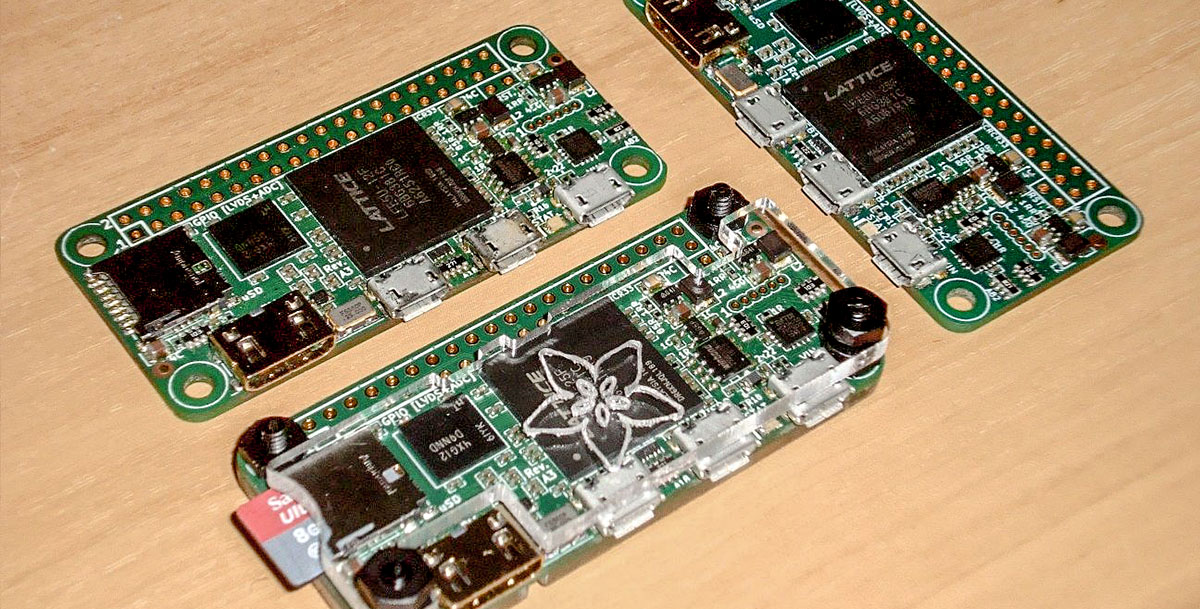
Previously,  I wrote a FleaFPGA Introduction. This board was about the size of an Arduino Uno with some GPIO pins, a VGA, USB, SD Card, PS2 Style Port, and a USB Host connector. At the time, the Lattice Mach XO2 provided the base logic. It found some success in the emulation community (*cough* x86 *cough*.) Unlike software emulators, the FPGA emulates the actual digital logic of classic computer ICs. Also known as ASICs.

Fast forward to today, well, this week. Valentin Angelovski is at it again, but this time, with a new and improved board the size of a Raspberry Pi Zero. He’s launched an Indiegogo Campaign for the FleaFPGA Ohm. For $45 (plus a bit for shipping) you can reserve your spot for when these start shipping early next year.

As you might have noticed, I don’t often promote or comment on crowdfunded projects. My experience with crowdfunded projects has not been positive. So what makes the FleaFPGA Ohm different? Well first, I know Valentin well. Granted distance has kept us from meeting face-to-face, we talk at least once a week on IRC. I’ve been eagerly watching his progress with the FleaFPGA Ohm. Second, this isn’t his first hardware project. He’s already sold many of the original FleaFPGA boards. While there is always a risk with crowdfunded campaigns, I think the risk here is minimal–and worthwhile.

If you’re interested in advancing your hardware hacking game, FPGAs are the next step. And I think the FleaFPGA Ohm is a serious option to consider. Since you might be new to FPGAs or Valetin’s projects, I sat down to interview him for this project. (Okay, it was Google Docs, but these questions and answers are real!)

Before continuing, in disclosure, I have backed this project. However, no other endorsement or paid promotion has happened. Below here are actual answers from Valentin to questions I asked (and had.)

Back FleaFPGA Ohm on Indiegogo

TI AN-31 Torn Paper

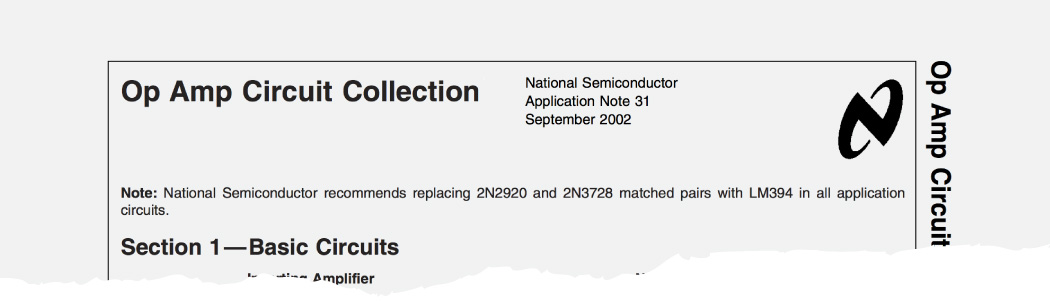
Op amps are one of the most versatile ICs in electronics. A purely analog device, they can be used for amplification, summing, integration, and a whole host of other circuits. AN-31 from Texas Instruments is 32 pages of op amp circuits. (Note: this document was created before TI acquired National Semiconductor.)

Even more amazing is that the author is Bob Pease. If you never heard of Mr. Pease, please spend a few minutes right now reading this TI page dedicated to him. His contributions to electronics are nearly immeasurable. (Sadly, he was involved in a car accident after attending the funeral of his equally famous engineering friend, Jim Williams.)

Download AN-31 from TI

(Mirror)

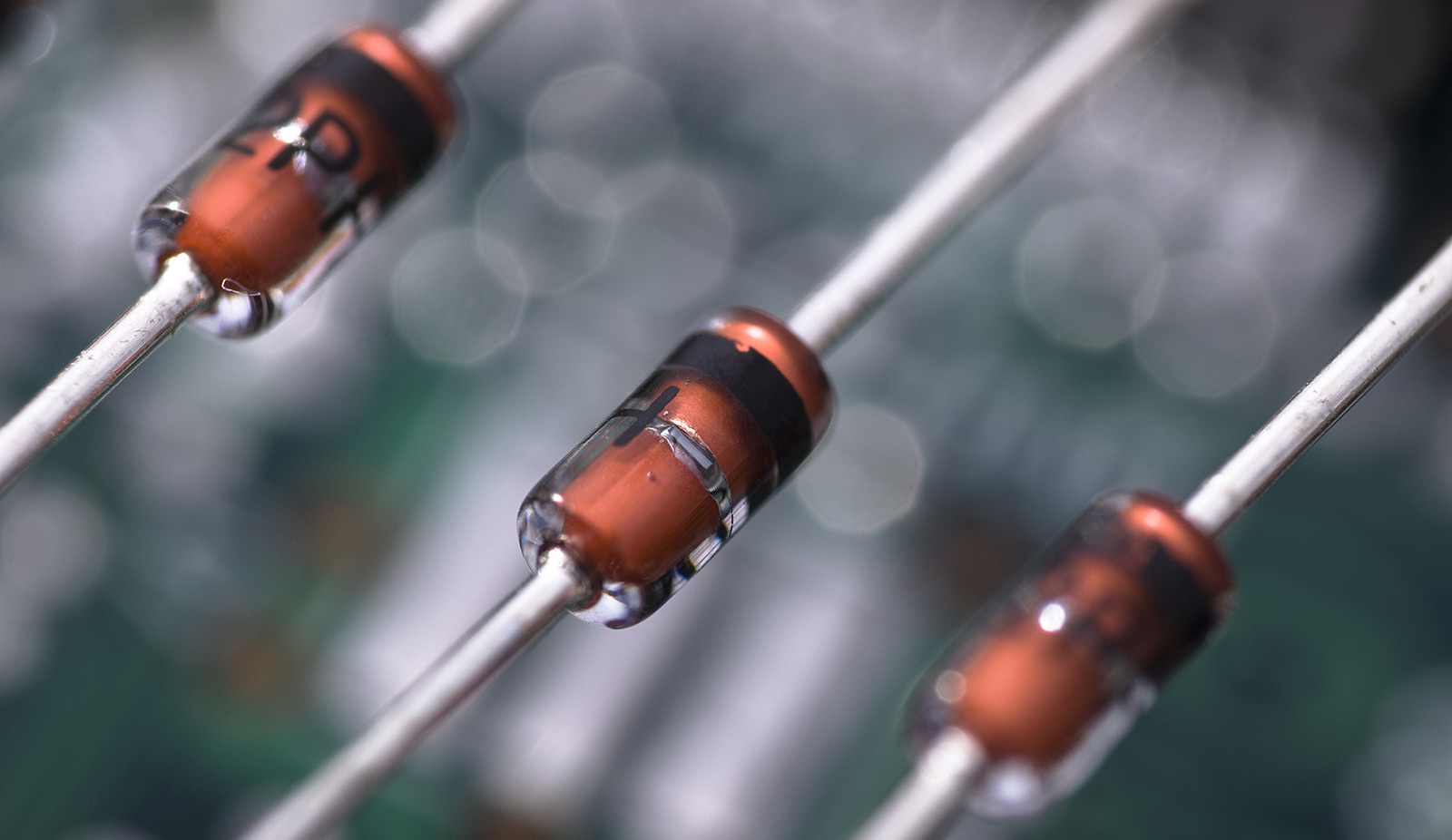
The Zener diode is often used to create a reference voltage. In tutorials and even college texts, there are mentions of creating a Zener diode based regulator. The idea is that the Zener maintains a known voltage drop. The problem is that current matters. This post looks a quick Zener diode overview and shows what happened when I tried to power a microcontroller using a “Zener diode regulator.”