When most people say “Arduino” they mean an ATmega328 based board like the Uno. This means a simple 8-bit microcontroller with only 2K of RAM. That’s 2,048 bytes of memory to work with. So when someone asked me if the Arduino could do speech recognition, to be honest, I laughed. Then my jaw dropped when I saw µSpeech. A speech recognition library for the Arduino Uno’s ATmega328.
There is one mistake that all C programmers make, regardless of experience. You’ll do it often when you get started, but never completely stop. The mistake? Confusing the “assignment” operator with the “comparison” operator. Take a look at this line of code:
[cpp] if (something = 0) {[/cpp]
Notice the problem? If not, then you might fall into this common trap. The most annoying part? A C-Compiler won’t give an error. That code is legal C. Legal code doesn’t mean you’ll get the results you expect. In fact, this is probably not even close to what you wanted. This simple mistake and why it “works” is explained below.
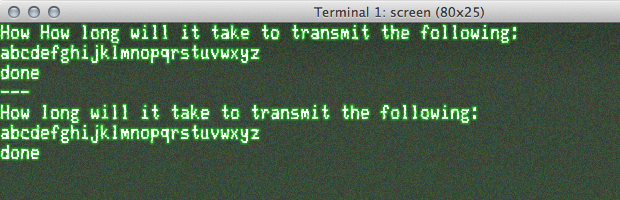
In the Arduino library, the Serial object has a method called “flush().” Often users go throwing it into programs without fully understanding what it does. It doesn’t help that it’s functionality changed when version 1.0 of the Arduino IDE was released.
Does Serial.flush() affect the Transmit Buffer or the Receive Buffer and when do you need to use it?
Having spent the past 6 years writing code for the Arduino platform, I’ve noticed a trend in myths from both newcomers and veteran users. Here are the Top 5 Myths I see come up on forums, in classes, and on IRC.
The seventh AddOhms TutorialCast has gone “live”. (Gone “uploaded” sounds wrong.) Being able to understand difference between an Arduino and a Pi is a critical point for many new electronics hobbyist. The boards seem so similar, but they are so different. AddOhms #7: Comparing the Arduino and Raspberry Pi