Category

Blog

Category

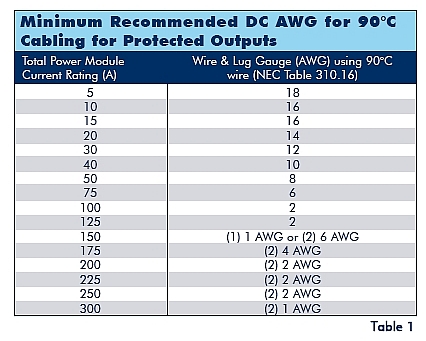
In an ideal world, wires would be ideal.  They’d have no resistance, and therefore, no voltage drop.  As we all know, our world is far from ideal which means so are our wires.  While copper is an excellent conductor, it does have some resistance associated with it.

This means when designing DC circuits, very common in the hobby world, you may need to take into account the size of the wire you’re using.

David Norton at EDN has put together an excellent primer titled:  What size and type of output wires should I use?.  Give it a read, bookmark it, and if you use Evernote like me, clip it.

Over the past several months I have been kicking around a new way to teach non-engineers about electronics.  My idea is to use simple language to explain complex engineering subjects.  Each video will be in the range of 3-5 minutes.  While putting together the first couple of topics I started to realize I wanted this to be something to stand on its own.

One of the most commonly used phrases when writing software is “reusable code.”   From the Wikipedia article on “Code Reuse”.  Reusable code is:

the use of existing software, or software knowledge, to build new software.

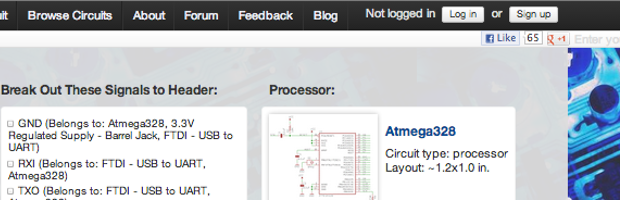
Software coders have been sharing and re-using code since they first start programming.  So why can’t this same idea be applied to hardware design?  Doesn’t it seem silly to redraw the ATmega328 for an Arduino based project or even the really simple linear regulator circuit?  Well, it can thanks to HackEDA you can start using reusable code to save time (and from creating mistakes).

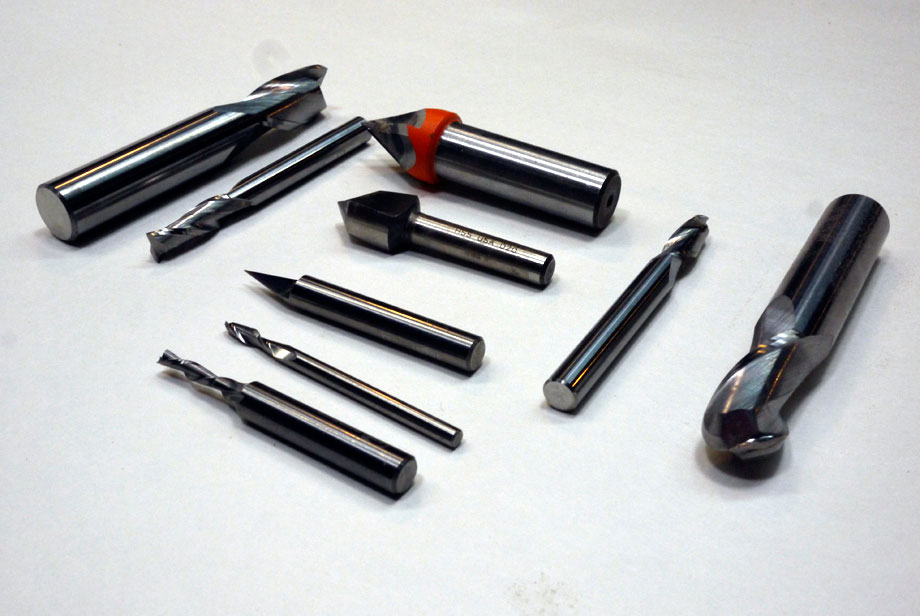
Early on in planning the design for the Quadrotor, we knew that eventually some of the metal parts would need to be milled.  Having very little milling experience, other than a couple of basic-use classes at TechShop, I had no milling experience.  When it came time to start buying router bits for the ShopBot and Tormach CNC routers, I didn’t know what kind of bits were necessary.

Understanding End Mills

Greg over at 100kGarages put together a primer titled CNC Router Bits Demystified, which does a great job of explaining the basics of an End Mill, Ball Nose, Downcut, Upcut etc.