Author

James Lewis

Browsing

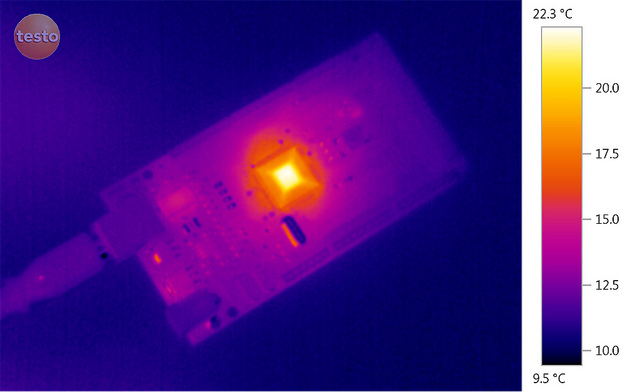
There are many options for powering an Arduino board.  The designers did a great job of designing an auto-select circuit that makes it simple to power the boards.  However, there are trade offs in how much power is available and how much power gets wasted.  Australian Robotoics has a great breakdown of what an Arduino looks like under a thermal camera, when powered from USB and various external sources.  I don’t agree with everything that is said in this article, but the pictures are very revealing (and cool to look at).

Fuelling Your Arduino – Why you should use an External Power Breakout | Australian Robotics.

Can you can imagine what people thought about today, 20 years ago?  Think of all the crazy things you (or others) thought we would be doing today.  Like… Video phone calls from your car, perhaps?

Now use the same futuristc imagination to imagine if someone put together a plan to build a first generation NCC-1701 (“No Bloody A, B, C, or D”).  Not just a plan, but a plan to do so in 20 years!  If successful, we could get to the moon in a matter of days and Mars within College Football season.

Check our http://www.buildtheenterprise.org/ for more details.

Is there a Kickstarter page yet?

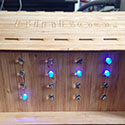
Several months ago I started a project to build a Binary Clock, using a Laser Cut enclosure.  The plan was to use Ponoko’s laser cutting service.  Looking through the materials available, I decided to use Bamboo.  Knowing I was going to build a Bamboo enclosure for a Binary clock, helped me come to the name BinBoo.  Even though I call it a Binary Clock, it is actually a BCD clock

There are still a few issues to work out, but I am very happy with v1.

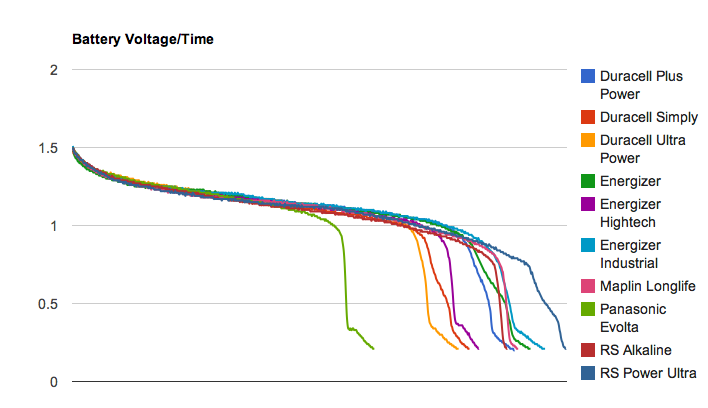
Why is choosing a simple AA battery such a daunting selection process?  Manufacturers are keen on giving their products different names and brag about the chemical technology that makes them up.  However, it is nearly impossible to make package-to-package comparisons of the battery’s capacitor.

Denis Hennessay has a GREAT write up on Measuring Battery Capacity with an Arduino.  In addition to full details on how his project works, Denis even shares the results of several AA batteries.  Nice!

The iconic picture of a homemade case for the Apple I, the computer that changed the world, is a great image for Upverter’s post about… changing the world.

While most of today’s attention grabbing innovation comes from clever software apps, most forget that the hardware the apps run on require significant investments in engineering time.  Making the next “multi core processor” is not a simple copy and paste function.  Nor are there any “Getting started with complex digital design books” you can breeze through in a weekend.

Software is always a very cool trick.  However, it is useless without the physical hardware to run it!  Read more at:   Why You Suck At Changing The World; Try Hardware – Upverter.