Okay, technically, this circuit *does* use Op-Amps. However, the ones shown here are integrated into an ATmega128DB microcontroller from Microchip. The DIP package breaks out two operational amplifiers that are controllable entirely by software. Even better, you can program them like they are an Arduino!
Oscilloscopes are available in many shapes and sizes. After figuring out how much bandwidth you need (or want), the next step is to choose the form factor. Do you go with the traditional bench style? When does it make sense to use a USB-based scope with your PC? And what about these newer tablets or battery-powered oscilloscopes? Learn the difference between them and see which one is best for you.
This episode was “sponsored” by Multicomp Pro. (I put sponsored in quotes because the brand name is owned by Newark which has the same owner as element14.)
Desoldering braid removes surface solder from a circuit board. It makes reworking PCBs easy and quick. With a few tips and tricks, products like MG Chemical’s Superwick can work like magic. You can remove solder from surface mount parts, wick away excess solder blobs, and repair boards using it. In this video, James shares tips and tricks from the element14 community for using desoldering braid. (Please note: the makers of Superwick, MG Chemicals, sponsored this video)
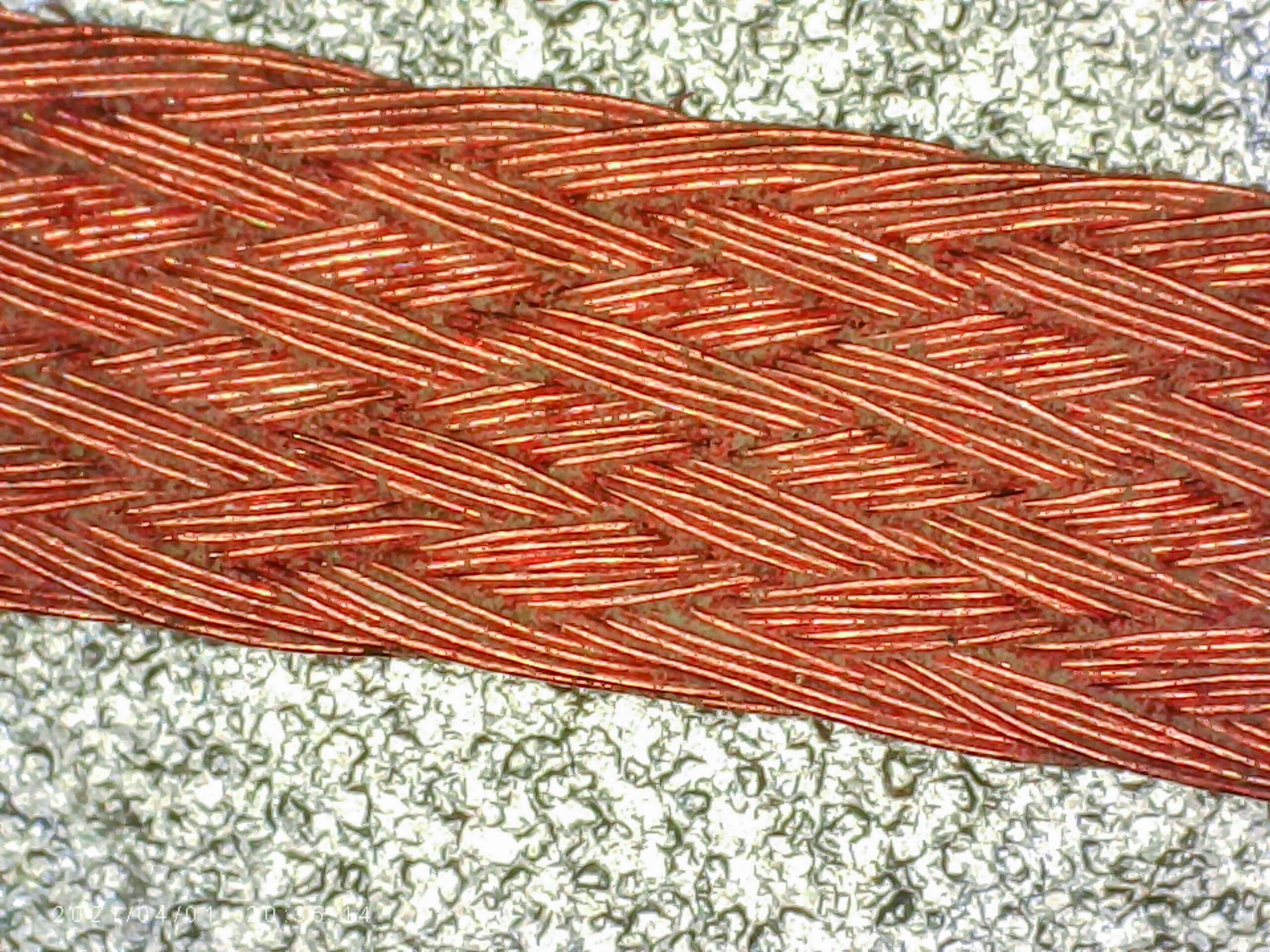
One of my favorite shots in the entire episode is one of the microscope pictures. I often write a draft script of what I want to cover before I shoot all of the overhead video clips. In my notes, I wrote, “microscope to see the flux–can you even see it?” Imagine my surprise when I looked at Superwick under the microscope and could clearly see the flux on it.
This episode was sponsored by MG Chemicals
Did you know that TTL chips do not output 5 volts? 74LS, 74HC, and 74HCT all have different input and output thresholds. Switching between logic families can be difficult if you are not careful. In this video, learn how different 7400-series logic families compare with input threshold, output voltage, frequency, rise time, and propagation delay.
Check out this TI Application Guide for a great resource on logic families.
Everything with a microcontroller has serial buses in it. Busses like UART, I2C, and SPI are very popular choices. When you have a problem with a sensor that uses one or the bus itself, you can use an oscilloscope or logic analyzer to “decode” the traffic. These decoders convert the 1s and 0s into readable HEX or ASCII characters.
I am not sure how I thought of the “multiple” James idea for the thumbnail. The concept had something to do with “serial,” but I am not sure what.
Anyway, my favorite James is the far left one. He has no idea where the camera is at.
Oh and this picture was done without a green screen. I took multiple shots of me standing in different spots and then composited them together.