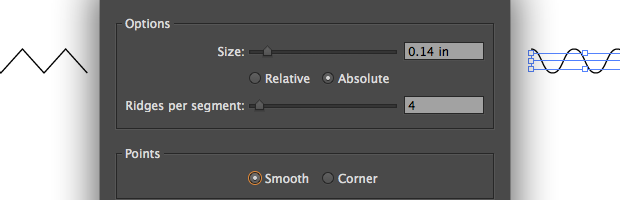
When working on the AddOhms video on the difference between AC and DC, I needed a vector diagram with a sine wave. Using Adobe Illustrator, I tried with a Bézier tool, but it didn’t look quite right. Here’s two methods I found to create a better line sine.
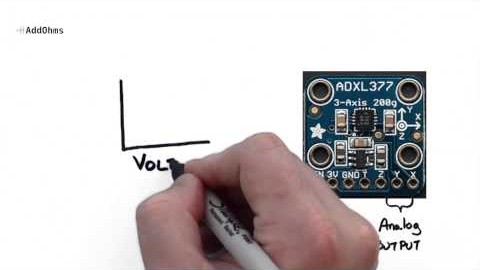
It isn’t always clear what is meant by calling a device or a signal “analog” and “digital”. This AddOhms tutorial explains the difference between analog and digital by using an analogy to clocks. Old-school clocks with hands are a great example of “analog” while alarm clocks with digits as their display are an excellent example of “digital”.
The fifth episode of AddOhms tackled the difference between AC and DC. One of the things I wanted to stress in this tutorial is that even though the acronyms stand for “current”, they get used to describe voltages as well. Which, after a video on the difference between voltage and current, seemed like something that needed to be stated.
No behind the scenes for this one, just the finished video.
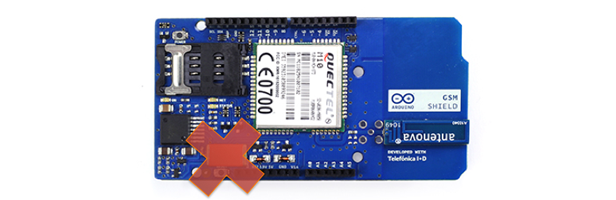
Tantalum is a really misunderstood capacitor. Well, all capacitors are misunderstood, but that’s a subject for another post. I ran across this post on the Arduino forums on the Arduino GSM shield. In the post, ddewaele, reports that the shield blew up, catching fire. At first some might think it was due to abuse by the user. While it is possible that reversing the polarity or applying over-voltage could cause a catastrophic failure, it is also possible that the user doing nothing wrong could result in the same failure mode!
Wait, what? So what gives? Well, there’s two things to understand. First, Tantalum doesn’t explode. It takes almost 2000°C before Tantalum metal will ignite. Okay, so if Tantalum doesn’t explode what is ddawaele seeing? It’s the cathode material, Manganese Dioxide, (MnO2) that is exploding…
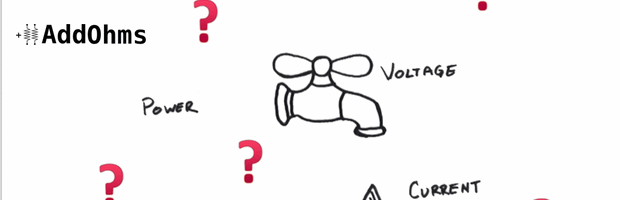
Starting with this new AddOhms TutorialCast series, we are taking a look at Electronics Basics. The first topic is on the differences between Voltage, Current, and Power. The twist on this explanation is that we are not using the usual “electricity is like water” analogy engineers seem to love. Instead, we just use plain language to explain the difference between these concepts.