Arduino boards have microcontrollers with notoriously small amounts of RAM. The Uno only has 2,048 bytes of static RAM available for your program to store variables. So when you need to keep non-changing variables out of RAM which is best to use const or #define?

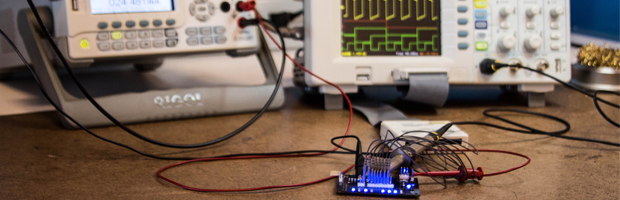
When I teach the Electronics Measurements class at the TechShop in Austin, I take a lot of pride in showing off the Mixed-Signal Oscilloscope. We have a Rigol DS1102D as well as a standard DSO. To help illustrate the power of the combined digital and analog channels, I created a Mixed Signal Oscilloscope Demo Board, based on a counter, that has an issue that could be turned on or off. This board is also my first time making use of OSH Park’s PCB service.

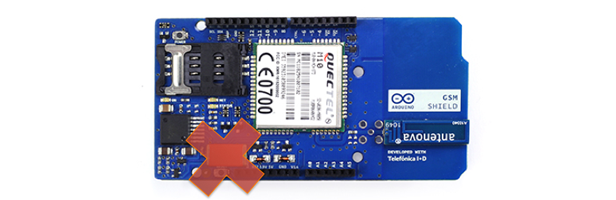
Tantalum is a really misunderstood capacitor. Well, all capacitors are misunderstood, but that’s a subject for another post. I ran across this post on the Arduino forums on the Arduino GSM shield. In the post, ddewaele, reports that the shield blew up, catching fire. At first some might think it was due to abuse by the user. While it is possible that reversing the polarity or applying over-voltage could cause a catastrophic failure, it is also possible that the user doing nothing wrong could result in the same failure mode!
Wait, what? So what gives? Well, there’s two things to understand. First, Tantalum doesn’t explode. It takes almost 2000°C before Tantalum metal will ignite. Okay, so if Tantalum doesn’t explode what is ddawaele seeing? It’s the cathode material, Manganese Dioxide, (MnO2) that is exploding…

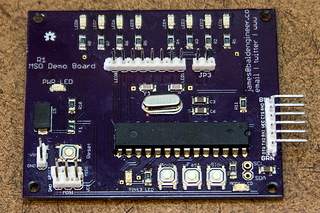
Last Update: 09/24/2013
Status: Done
Github: https://github.com/baldengineer/Mixed-Signal-Oscilloscope-Demo-Board
Abstract
As a member of the TechShop in Austin, TX I teach a class on Electronics Measurements. The class includes a variety of test equipment like power supplies, DMMs, and Rigol oscilloscopes. One of the oscilloscopes is a Rigol DS1052D which is a “Mixed Signal Oscilloscope.” In addition to the two 100MHz analog channels, the scope also include 16 digital channel channels. It is a logic analyzer and oscilloscope in one!

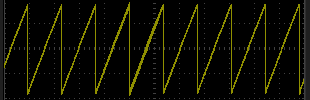
Users of the ATmega328 based Arduino boards will recognize that the analogWrite() function doesn’t actually do anything analog. It just sets the duty cycle of a pulse width modulated (PWM) signal. The (new) Arduino Due board, which I have had limited time to play with, actually sports two Analog DAC channels.
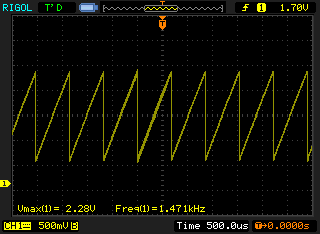
Using a very simple for() loop, it is possible to generate a sawtooth waveform using these channels.