Arduino millis examples with LEDs | AddOhms Live #5

When it is time to move away from delay(), it’s time to learn how to properly use millis(). If you’ve had trouble following my millis() examples, maybe a live tutorial will help.

In this AddOhms Livestream, I go through 4 code examples:

1. Blink, the one with delay(), as a starting point.

2. Blink Without Delay, line by line, what is it doing

3. PWM Fading without delay() (and with buttons)

4. Binary counter that uses buttons to speed up and slow down.

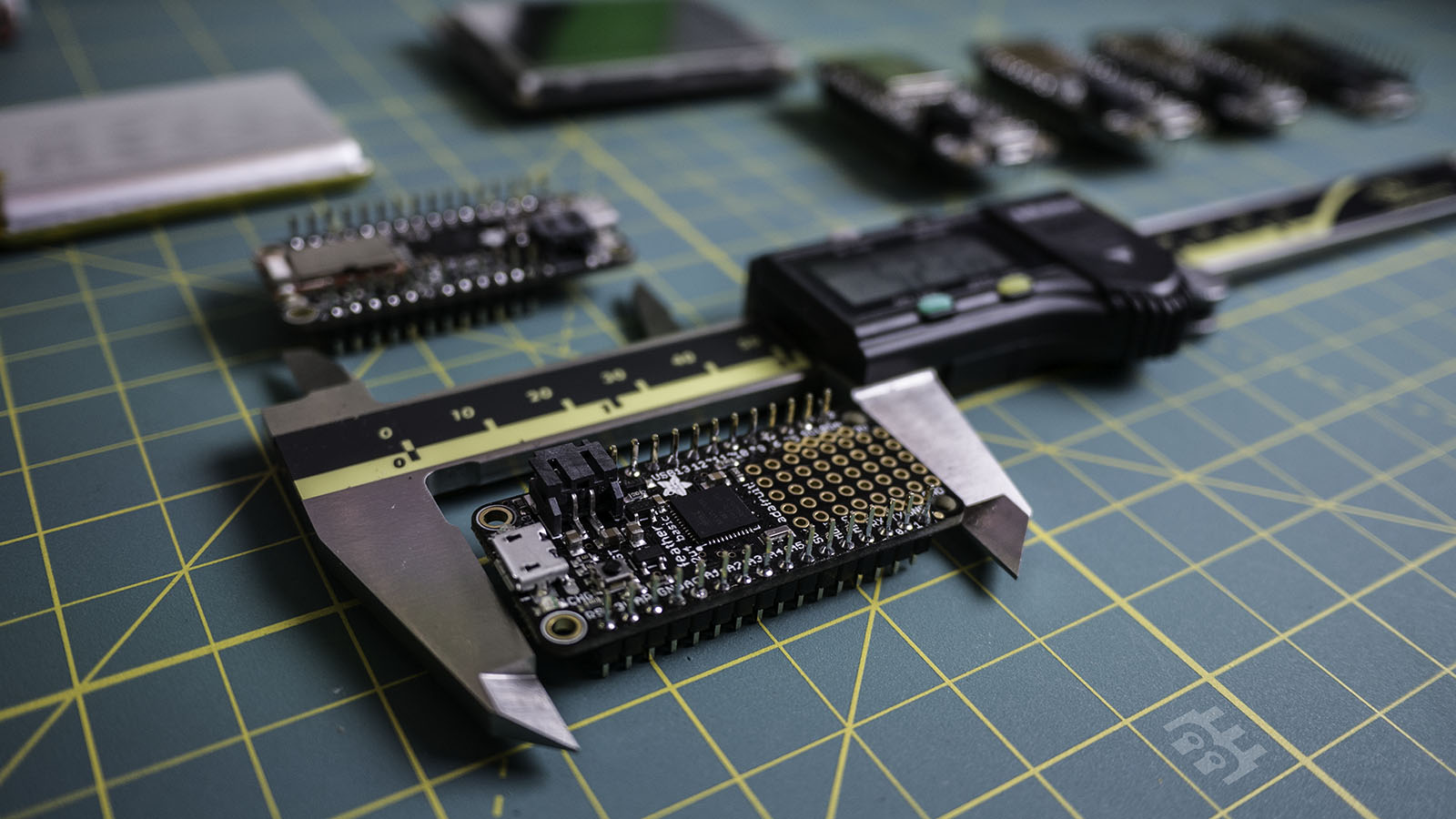
Four days ago, I found out I needed to make a piece of a costume. The idea was to combine a TFT LCD with a microcontroller and Bluetooth Low Energy. I checked my microcontroller bin and found some Adafruit Feather Boards. In this post, I will introduce the feather family and provide a decision chart for choosing the right one for your project.

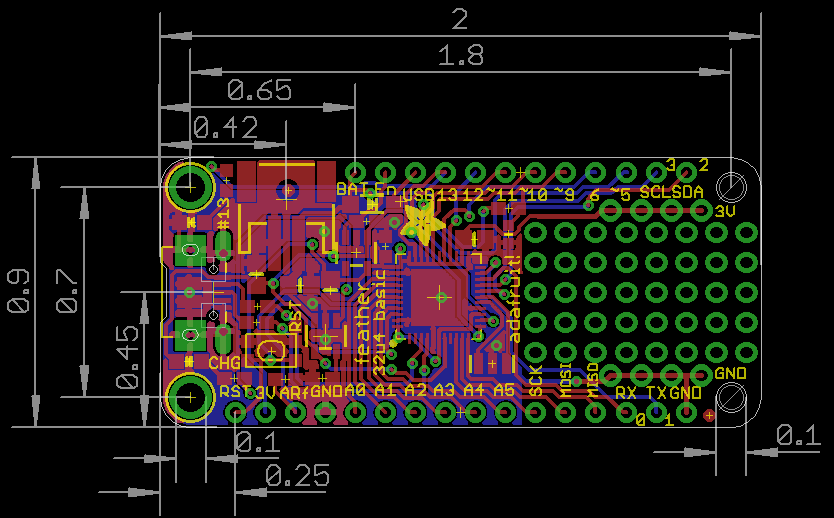
Image from Adafruit Learning System

The Feather board have a standard footprint and pinout. Most(All?) have a USB connector, a microcontroller, two rows of pins, and a battery charger. They measure 50.80 by 22.86 mm, which is 2.0 by 0.9 inches.

One of the last significant steps in a project is designing the custom PCB. This stage means creating a DIY Arduino board that is custom to the application. Two examples of my past projects are BinBoo, a Binary Clock, and Open Vapors, my reflow oven controller.

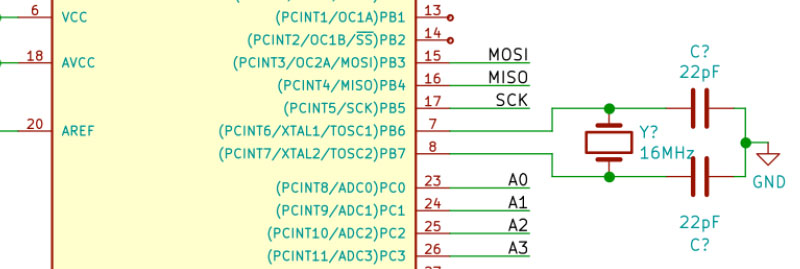
While working on a project for a friend, I got to thinking; it would be nice to have a checklist for circuit elements to include on a DIY Arduino board. In the early days, I forgot to add a filter cap to AREF, for example.

These tips are based on an 8-bit AVR design, like the ATmega328p chip. You could apply these tips to other 8-bit AVRs. Until now, I have not designed a custom board around a 32-Bit/ARM board. Though at only $16, I would be tempted to just solder the Teensy module directly to my finished board.

Below is a written list of items for a DIY Arduino checklist. If you’d like to see me design this board in KiCad, check out this AddOhms Tutorial.


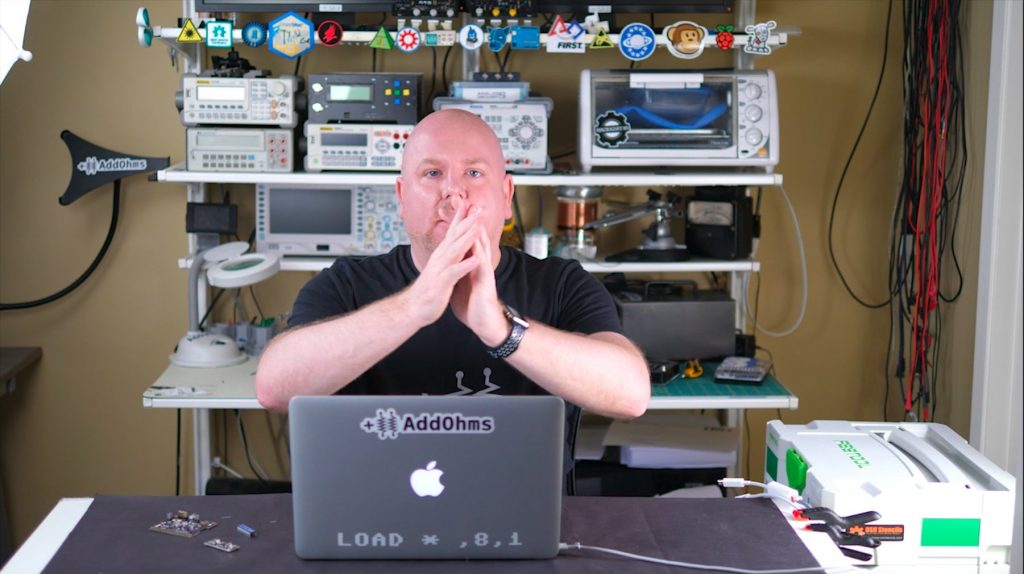
The next AddOhms Tutorial is how to design a DIY Arduino board. What are the elements you need to include in your own circuit design? While editing the video, I ended up on this frame. It looked to me like I was praying. (At one point I was having serious technical issues with my equipment. But it is unrelated to that frame!) On Twitter, my friend Philip had a different take.

What caption comes to mind when you see this picture? Leave a comment with yours.

Op-Amp Question

If you can’t think of a caption, maybe you can help with a different question. What your favorite LM741 op amp alternative? I’ve been working on some tutorials and videos on op-amps. I’d like to incorporate something other than the old stand-by.