Category

Blog

Category

As 2017 comes to a close, I looked back to see what readers made the most popular. It was an exciting year. The Arduino family came back together, Adafruit trolled the internet with rumors of a RadioShack buy out, and for me, I changed jobs.

Project wise I got my RetroPie SNES build completed, using an old Super Famicom case. This case is one I bought in Japan for 500 yen (about $5.) This work also led me to discuss voltage divider circuits. And I looked at a couple of scopes.

In case you missed it, here is what you as a reader found interesting over the past year.

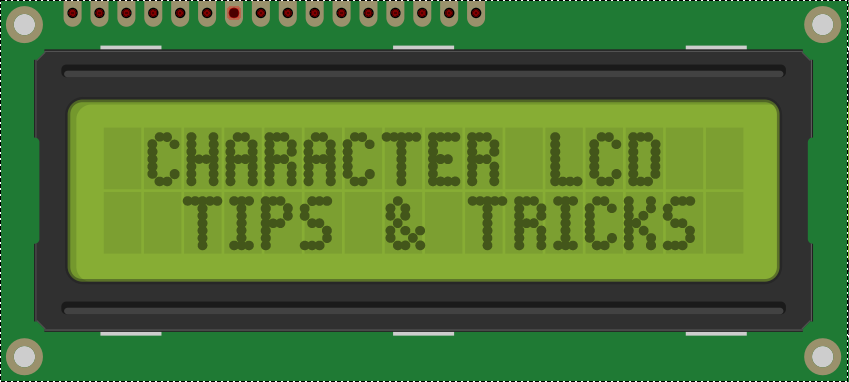
When I started working on Open Vapors, I thought the stumbling point would be the PID algorithm or safe AC line control. However, it turned out; I spent a significant amount of time understanding how to print to the Arduino LCD display correctly.

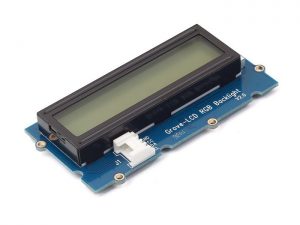
Grove Character LCD with RGB Backlight

If you need an easy to use RGB LCD, check out the Grove LCD from SeeedStudio. They sent me one to check out. The LCD comes with Seeed’s “grove connector system” which can connect to a variety of their Arduino-compatible boards. You can also pick up the Grove Base Shield which adds a variety of Grove connectors to an Arduino Uno. The Grove LCD makes it super easy to connect up a character LCD. It is very plug-and-play.

As I dig into my latest project, the lessons I learned back then are coming back to me. Here are 7 tips for driving an Arduino LCD display, like one with 2×20 or 4×20 characters.

As a kid, I got the book “Upgrading and Repairing PCs.” (Now in its 22nd edition.) It was the first book to explain to me the PC architecture. I considered, how were there so few pins on an AT-style keyboard connector when there were 101 keys on the keyboard? That is when I first learned about the keyboard matrix.

Original image from Deskthority Wiki. (Edited image is shown.)

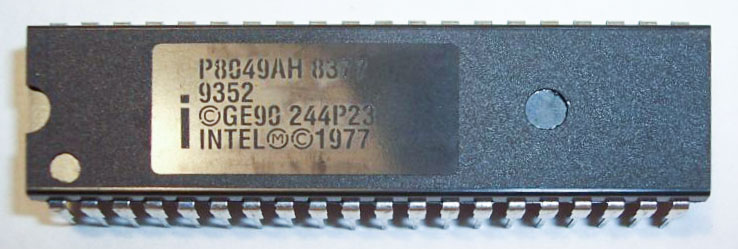
The keyboard matrix itself did not amaze me, but instead the idea there was an entirely separate 8-bit microcontroller inside of the keyboard. Early keyboards may have used the P8049AH, which, there is still some stock available to purchase. I was fascinated with the idea an entire computer was necessary to run the keyboard, to use my “real” computer. Why did it take something as complicated as a microcontroller?

This year Denver hosted the 2017 Open Source Hardware Summit. It’s a one-day seminar with talks, demos, and a couple of drinks. The day after the official show Sparkfun and Aleph Objects hosted tours of their facilities. The combination of events made for a fantastic immersion into open source hardware.

There were many talks and demos setup during the summit. Here are three that caught my attention. Please note, this is not to rate or judge the quality of anyone’s work. Simply, a couple of weeks later these are the three talks that stuck with me.

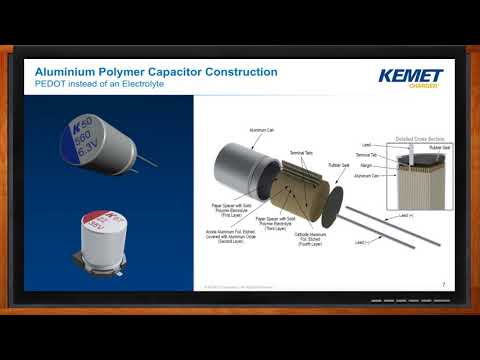
What are aluminum polymer capacitors? These are a solid type of capacitor that replaces the liquid electrolyte with a solid polymer material. Sometimes you might hear these capacitors called “organic aluminum.” Technically, they are still “electrolytic” capacitors. However, the colloquial term of “aluminum electrolytic” refers to the traditional wet electrolyte-based capacitors.

In this video, I meet with Amelia Dalton of EE Journal, and we discuss these capacitor types. Mouser and EE Journal developed the video in joint with KEMET. (Previously I talked on Amelia’s Chalk Talk about SSD Capacitors.)

For me, the release of this video is bittersweet. It is one of my last projects before my departure from KEMET. However, I am excited to talk about aluminum polymer capacitors because they represent one of the “newer” technologies when it comes to capacitors.

Difference between Aluminum Polymer Capacitors and Aluminum Electrolytics
As mentioned, the key difference between the capacitor types is the electrolyte. In a traditional aluminum electrolytic, there is an electrolyte that connects the cathode plate of the capacitor to the cathode electrode. In a polymer capacitor, a solid conductive polymer material replaces the wet electrolyte. The most common polymer material is PEDOT. The use of this material provides an exceptionally low ESR which makes the capacitors can handle more ripple current. Also, because there is no electrolyte to “dry up” or “wear out,” the operational lifetime of these capacitors is much longer. Overall, aluminum polymer capacitors are an excellent alternative to traditional electrolytics.

Learn about Aluminum Polymer Capacitors