Category

Around The Web

Category

What does Silicon have to do with Social Media?  Silicon’s Atomic Number is 14.  Wait what?  Oh… element14 is, basically, a social media site for electrical engineers, embedded designers, makers, and hobbyist.   Forums, blogs, videos, and all kinds of resources from “celebrities” around the EE world.

It’s one of the most active communities and, in my opinion, one of the cleanest layouts.  Over the past few months, I’ve been becoming more active there.  If you’re there, check out my activity feed and add me as a contact!  It’s a great way to stay in touch.

Note that I don’t have an affiliation with element14, other than being a member, just like you can be.

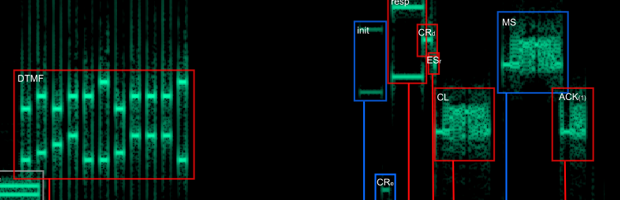
This beautiful Spectrogram video  is instant nostalgia for any of us who used BBSes back in the 80s and 90s.  The video comes from Scott H on Youtube.

Several of the videos I have made incorporate the initial connection sound (until the echo suppression is disabled.)

Enjoy this blast from the past, unless you are one of the 3 million subscribers mentioned in AOL’s 2012 Annual Report, which still use dial-up!

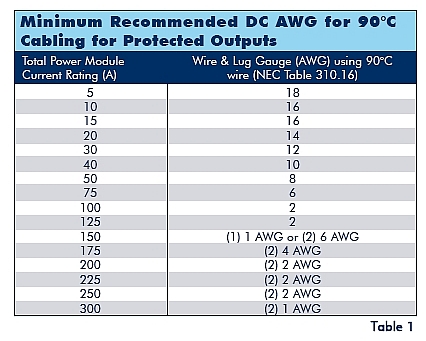
In an ideal world, wires would be ideal.  They’d have no resistance, and therefore, no voltage drop.  As we all know, our world is far from ideal which means so are our wires.  While copper is an excellent conductor, it does have some resistance associated with it.

This means when designing DC circuits, very common in the hobby world, you may need to take into account the size of the wire you’re using.

David Norton at EDN has put together an excellent primer titled:  What size and type of output wires should I use?.  Give it a read, bookmark it, and if you use Evernote like me, clip it.

One of the most commonly used phrases when writing software is “reusable code.”   From the Wikipedia article on “Code Reuse”.  Reusable code is:

the use of existing software, or software knowledge, to build new software.

Software coders have been sharing and re-using code since they first start programming.  So why can’t this same idea be applied to hardware design?  Doesn’t it seem silly to redraw the ATmega328 for an Arduino based project or even the really simple linear regulator circuit?  Well, it can thanks to HackEDA you can start using reusable code to save time (and from creating mistakes).