Author

James Lewis

Browsing

When you need to buffer the output of an R-2R ladder or an RC filtered PWM signal, an op-amp is a single chip option. Unlike a discrete NPN transistor like a 2n3904, there is a lot going on inside of an LM741—or any op amp for that matter.

What if you could look inside of the op-amp? Wouldn’t it be cool to see how many transistors make up these small chips?

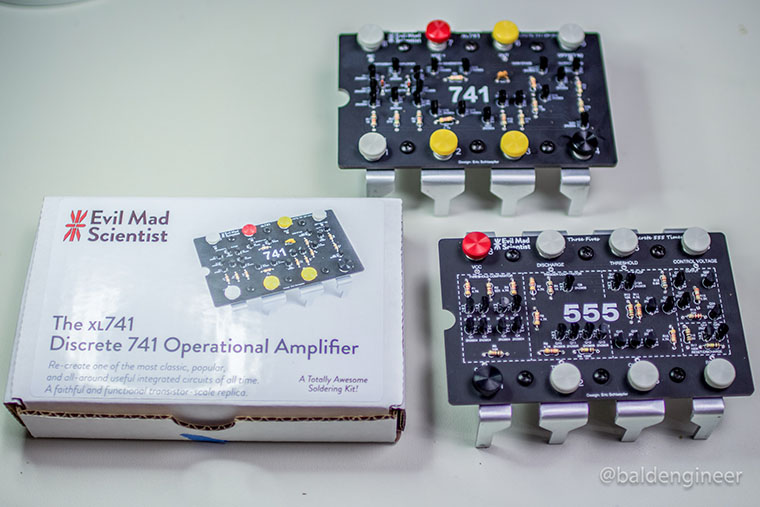
Put your electron microscope away. The XL741 from Evil Mad Scientist Labs is perfect for the job. I built one of these super fun solder kits and compared it to a real 741.

After fighting bugs, bad connections, and burned out chips your project is working–or even done. The next step? Record a video, edit it, and upload it to YouTube.

Too many steps? Then maybe you just want to do a Periscope demo. Within seconds, you can be broadcasting your project to the world.

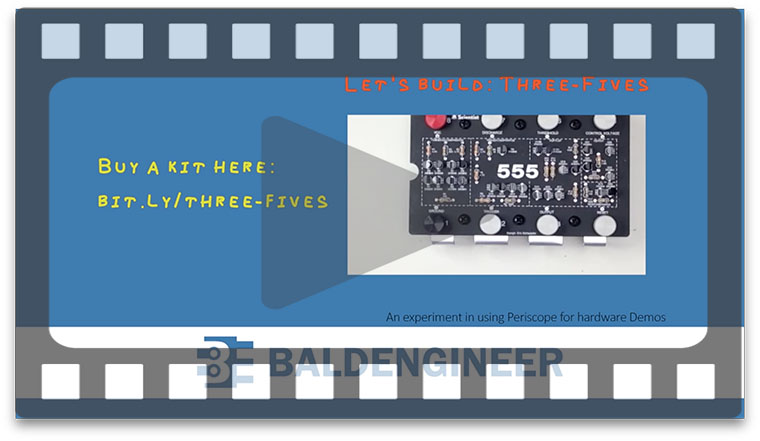
This past weekend I tried my first couple of scopes. The first Periscope “demo” was me soldering together a Three Fives from Evil Mad Scientist Labs. The others periscope demos were 3d printing related.

When it comes to a hardware project demo, I see some challenges. Check out these five things to watch out for and, if you’re interested, you can watch my soldering Periscope demo.

One of my early hobbies as a kid was collecting baseball cards. At every card show, I was on the lookout for the  1989 Ken Griffey Jr Rookie card, #1, from Topps. My collecting craze lasted until the baseball strike in 1994. Then I lost interest in professional baseball and its collectibles.

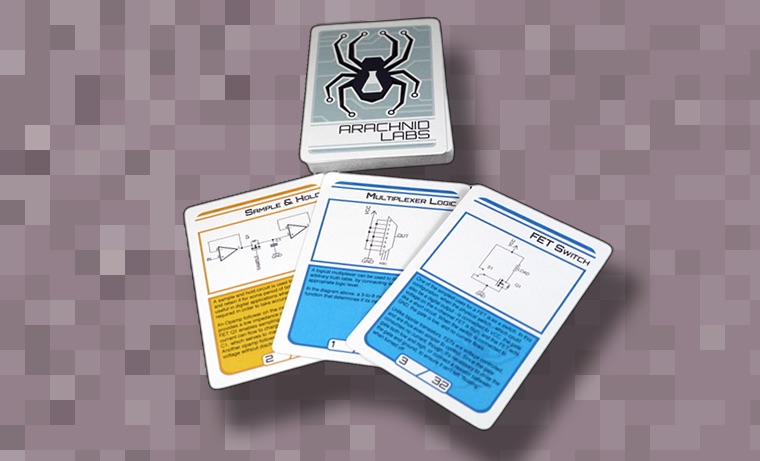
You’re asking, what does this have to do with electronics? Well, the Circuit Trading Cards from Arachnid Labs reminds me of the days I spent trading baseball cards. Instead of memorizing RBIs and Homerun counts, these circuit patterns trading cards teach you circuit basics.

The card stock used is of high quality, and each unique card has a durable feel. One side is the Arachnid Labs logo while the other is what I call the “information side.” The information side is one of three colors: Yellow (Analog), Blue (Digital), and Green (Power).

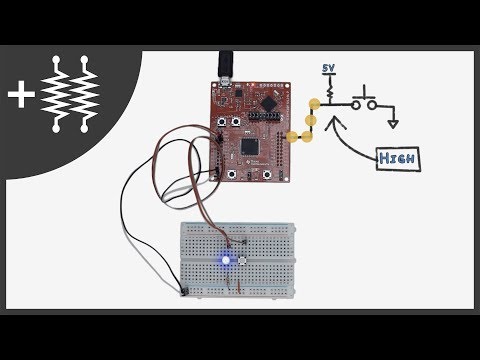
The latest AddOhms looks at why you need a pull-up resistor when using push-buttons. This video goes into what happens when you leave a pin floating, what a floating pin means, and how the pull-up works. You can get more information about the video on the AddOhms Episode page.

[shareable]Pull-Up Resistors can be a difficult topic to understand. That’s why I made this video.[/shareable]

This tutorial is the 2nd time I’ve made a video on pull-ups. Despite being a single resistor, it can be a difficult topic for new hardware designers to understand. The pull-up video was the first video tutorial I ever made. In fact, the YouTube version uses YouTube’s “stabilization” algorithm, which gives the video a very warped feel.

AddOhms #15 shows improvements in skill over the past couple of years!

What’s another topic that I need to cover in an AddOhms Tutorial?