Starting with this new AddOhms TutorialCast series, we are taking a look at Electronics Basics. The first topic is on the differences between Voltage, Current, and Power. The twist on this explanation is that we are not using the usual “electricity is like water” analogy engineers seem to love. Instead, we just use plain language to explain the difference between these concepts.

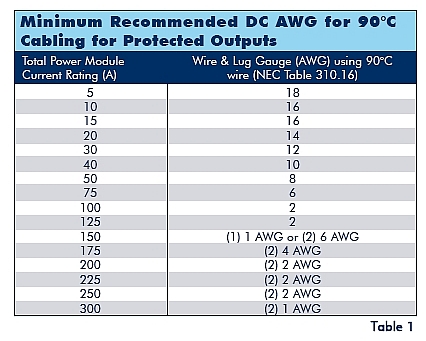
In an ideal world, wires would be ideal. They’d have no resistance, and therefore, no voltage drop. As we all know, our world is far from ideal which means so are our wires. While copper is an excellent conductor, it does have some resistance associated with it.
This means when designing DC circuits, very common in the hobby world, you may need to take into account the size of the wire you’re using.
David Norton at EDN has put together an excellent primer titled: What size and type of output wires should I use?. Give it a read, bookmark it, and if you use Evernote like me, clip it.
Over the past several months I have been kicking around a new way to teach non-engineers about electronics. My idea is to use simple language to explain complex engineering subjects. Each video will be in the range of 3-5 minutes. While putting together the first couple of topics I started to realize I wanted this to be something to stand on its own.
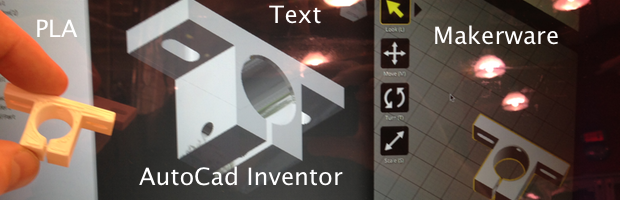
While practicing the Quadrotor‘s motor mounts on a Shopbot gave me experience in how to register two sides for milling, I didn’t want to invest the time required for the arm mounts. So I decided to make use of the MakerBot Replicator 2 to print physical samples in PLA. Time per piece went from about an hour to about 15 minutes.
One of the most commonly used phrases when writing software is “reusable code.” From the Wikipedia article on “Code Reuse”. Reusable code is:
the use of existing software, or software knowledge, to build new software.
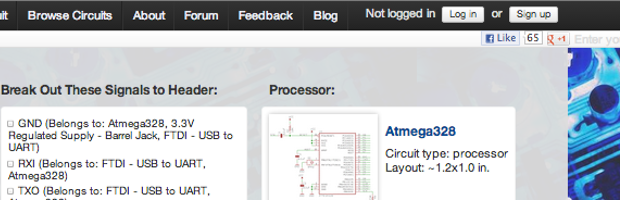
Software coders have been sharing and re-using code since they first start programming. So why can’t this same idea be applied to hardware design? Doesn’t it seem silly to redraw the ATmega328 for an Arduino based project or even the really simple linear regulator circuit? Well, it can thanks to HackEDA you can start using reusable code to save time (and from creating mistakes).