The Open Vapors project has taken some big steps forward recently. The controller’s enclosure is now a custom box, has a front panel, and the LCD’s menu system is almost done.
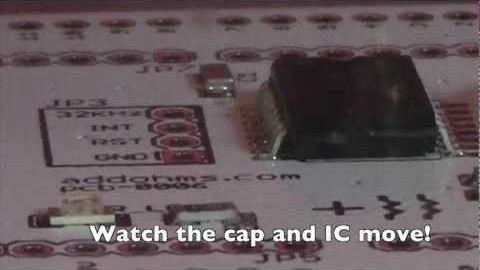

The Open Vapors project has taken some big steps forward recently. The controller’s enclosure is now a custom box, has a front panel, and the LCD’s menu system is almost done.
The 11th AddOhms Video is live and the subject is What is a MOSFET, and how to use them. This turned out to be the longest video I’ve made so far. In fact, I probably should have broken off the power dissipation part, but felt it needed to be addressed. I think many non-engineers look at a MOSFET (or regulator) datasheet and see a huge power value or current rating, but not realize you need a heatsink to achieve them.
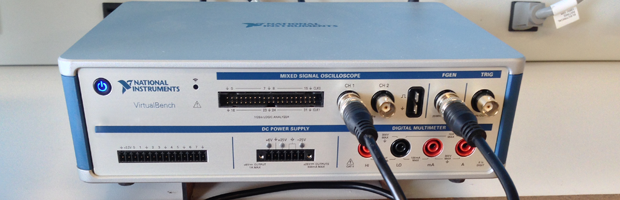
Modern smartphones have eliminated the need for a number of devices. Often I use my smartphone as a scanner (CamScanner), car GPS, voice recorder, security token, pedometer, light controller, and oh yeah, a phone. My electronics bench is currently home to a Bench Power Supply, an Oscilloscope, and a Function Generator. While good instruments, they should worried because they’re going to get replaced with one device: National Instrument’s VirtualBench.
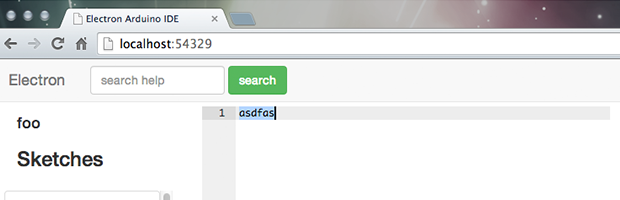
The Arduino IDE is great in that with a single download on any PC platform, new users can start writing code and see immediate results. The same simplicity though, limits some of the more “advanced” features found in modern editors. Also one of the IDE’s greatest strengths is cross-platform through Java. This is also one of its weaknesses. Java is outdated and it’s time to move on.
There’s a slew of other Arduino development environments out there, but most of them are limited to 1 or 2 platforms. Electron is a novel idea because it is based on Node.js, meaning it runs in Google’s Chrome.
The initial implementation even includes a Serial monitor!

Sometimes the hardest lessons are the ones you have to learn multiple times. When getting started with Electronics circuits, there’s a handful of things that can ruin a day (or experiment.) Here are 6 mistakes I made when I got started, and mistakes I see in the beginner classes I teach.