

Here are some of my favorite highlights from the book.

Here are some of my favorite highlights from the book.
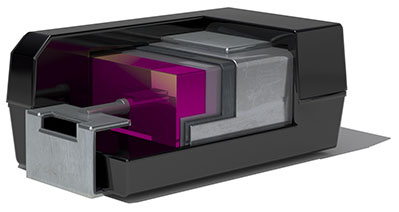
KEMET has been working hard to meet the needs of automotive engineers in recent months. These efforts have resulted in several technology developments that will be of particular interest to design engineers involved with automotive electronic systems.
Firstly, the company made several key developments in polymer electrolytic capacitor technology. Recent additions to their high-voltage MLCC’s ArcShield line include new automotive grade parts rated for >500V and an X2-Rated Film capacitor that passes AEC-Q200’s qualification guidelines as well.
Read more on John Day’s Automotive Electronics about KEMET’s AEC-Q200 Polymer Electrolytic Capacitors.
Think you can do without Pull-Up Resistors? Only Chuck Norris doesn’t need them.

A DMM, or multimeter, is the go-to instrument for debugging most circuits. You probably already have at least one DMM on your bench for this reason. Me? I have three. But that’s a different story. Let’s talk about a Logic Analyzer.
Digital signals represent two states: on (usually “1”) and off (usually “0”). A multimeter (DMM) may be of limited value for these signals. When using the DC voltage measurement, you can see “something” is happening, but not exactly what that “something” is. For example on a PWM pin, you’ll see the RMS Voltage change as you modify the duty cycle. However, you can not see if the signal is “ringing” when turning on and off.
For debugging digital signals, a popular option is to use a Logic Analyzer. If you are not familiar with a logic analyzer, or you are not sure if you need one, this tutorial should help.
First I’ll give a simple overview of what a Logic Analyzer does, some considerations when to use one, and then give some terms to know when looking at them.
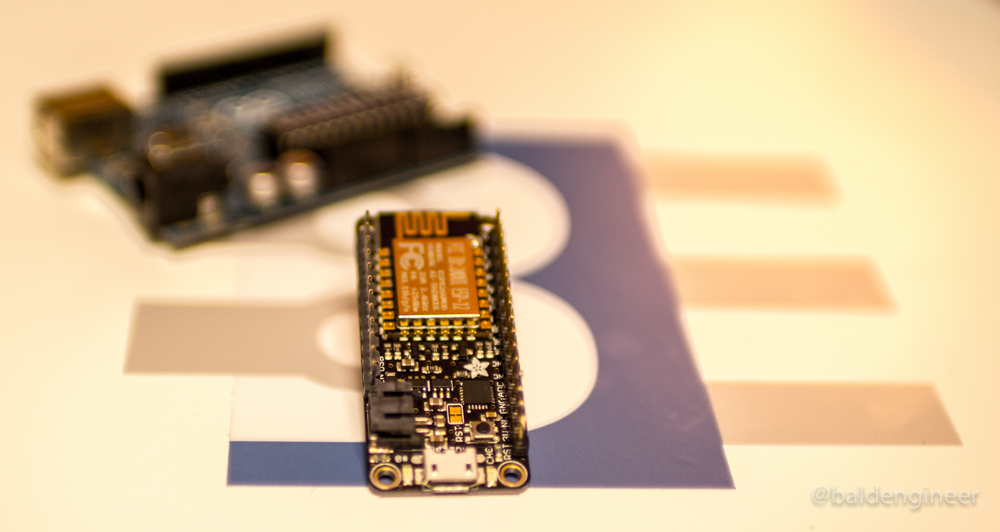
A couple of weeks ago I posted four things to know about the ESP8266 before using one. The biggest surprise from that post is people seem to think I do not like the ESP8266! This idea is not the case; the ESP8266 is awesome. I like them so much that my Adafruit Feather HUZZAH with ESP8266 has become my go-to Arduino board.
Wait what? James uses something other than Arduino? Yes, I do! I have many different boards and have used most of them for one task or another.
However, when it came to day-to-day “make something quickly” type work, I relied on my Uno. But not anymore. Here are the 5 reasons the ESP8266 is my go-to Arduino board.