Logic probes are great for debugging 7400 series logic chips and digital circuits. In this video, James makes a counter circuit and debugs each stage as he builds, with a Logic Probe. If you are wondering, “do I need a logic probe” this video shows how one can be used and even answers when you should consider buying one.
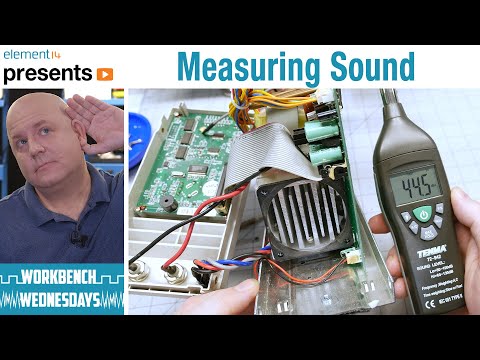
One of the loudest pieces of equipment on Bald Engineer’s electronics workbench is the Electronic DC Load. James has finally had it with its noise and decided to swap the fan out. To see (and not just hear) an improvement, he uses a Tenma 72-942 handheld sound meter to compare before and after.
Turning on a MOSFET takes more than knowing the threshold voltage. A special event occurs when a FET turns on, which is called the Miller Plateau. The gate voltage sticks to the threshold voltage while the drain opens up. In this video, James shows how to measure the Miller Capacitance, using an oscilloscope and custom MOSFET test board.
This video came from some measurements I did on a live stream. I had intended to demonstrate something else, but the board I created was such a great demo board for the Miller Effect.
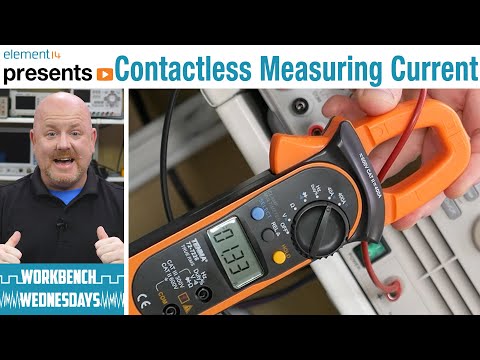
One of the safest ways to measure current is with a clamp. Clamps do not require you to break the circuit and they safely measure wires with thousands of amps. In this video, we measure DC current in the lab, AC current of a reflow oven controller, and the DC current in a car using a Tenma 72-7226 True RMS Clamp Meter.
This video was the last one I did before moving to a new house / lab.
Chances are, you have used the continuity mode of your digital multimeter. But how much do you understand about how it works? In this video, we break down how the mode works, what the beep means, and show examples of how to use it (correctly.) It might seem silly to spend so much time on such a simple mode.
However, I have run across a few posts on the Internet, including the element14 Community where people do not understand continuity mode. Sometimes it is just a lack of experience and sometimes it is a total lack of understanding of what is happening. The biggest mistake, of course, is trying to measure continuity on a powered circuit. That is just a no-go. So in this video, I wanted to show what the meter is actually doing, how it sees different components, and give a couple of real-life examples of how to use it.