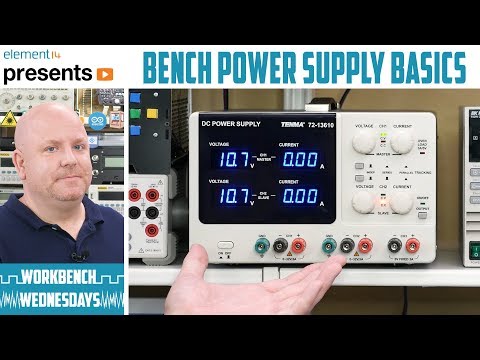
A bench power supply makes powering circuits easy and safe. Learn how to adjust basic controls like voltage. Finally, see how “current limiting” works (and why you should use it.) See how you can use built-in series or parallel tracking to increase a bench power supply’s voltage or current output. Last, if you are in the market for a power supply, do not forget to add some leads like mini-grabbers, alligator clips, and banana plugs.
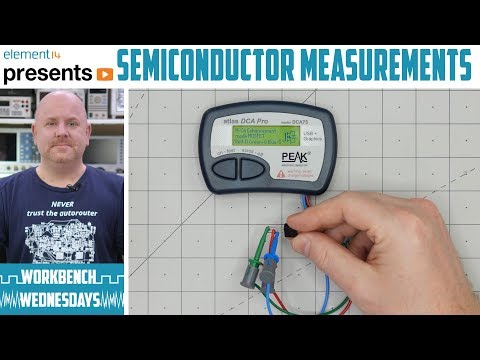
See more at element14When it comes to transistors, there are only so many things a multimeter can measure. The DCA Pro from PEAK Electronics makes short work of testing parts like a transistor. This small device can determine pinout, component type, and essential parameters in a matter of seconds. Not only that but it can be connected to a (Windows) PC and draw parameter curves.
Check out the video review to see how the device and software work. Then head over to the element14 page where you can download a zip file full of example parts I measured for you. Use the free DCA Pro software to open them.
You might also want to check out this MOSFET Curves post, which complements this video tutorial. Another resource you might find helpful on semiconductors, or transistors, is this post on MOSFET Myths.
See more on element14Python is everywhere. Its capabilities continue to grow. Not only can you create simple scripts, but you can create full-blown applications with it. The core has been scaled down to run on 32-bit microcontrollers like the ESP32 and Adafruit Feather M0. You can even use Python engineer modules to design stuff like circuits. There are electronics Python modules that create schematics, simulate circuits, and make solving math a cinch. Here are some of the modules I found that make Python usable for (electronics) engineering.
Upfront, make sure you have a functioning Python environment. Update the package manager “pip” since all of these electronics python modules rely on it. Speaking of dependencies, you may need to also install third-party libraries for some of them. From what I can tell, these all should be platform-independent. However, I only tested these electronic modules with 64-bit Windows.
Electrostatic Discharge (ESD) damage can occur without you knowing it. That’s bad. However, the good news is that with little effort you can prevent it. Duratool has a kit of the most common tools for any electronics workbench. It includes a large mat, grounding cable, wrist strap, ESD-safe cleaner, and a simple electronic tester. Don’t get shocked by electrostatic discharge; add these simple tools to prevent it.
This review is on a kit that includes:
- Large ESD Mat
- Ground Cable
- Wrist Strap
- Wrist Strap Tester
- Electrostatic Discharge Mat Cleaner
Even if you aren’t interested in ESD, you might want to watch the first 30 seconds. Hopefully, the clever thumbnail explains why. 🙂
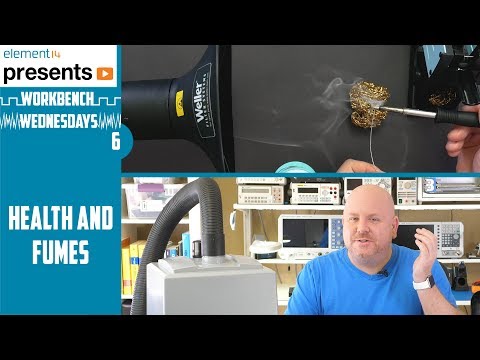
More info on element14An overlooked danger of electronics soldering is the fumes. While the smell and smoke may not be pleasant, the chemicals in the fumes can be harmful. Is solder made with lead(Pb) your only concern? Learn about where lead-free solder came from, what different flux types mean, and two ways to keep your air (and your lungs clean.)
In the video, I show a cheap “smoke eater” and a professional fume extractor. There is a cost difference of $50 and $700 between the two. However, either is better than having nothing.
Ask Questions on element14