Category

Events

Category

The Engineering Commons Podcast LogoThe awesome hosts on The Engineering Commons (TEC) podcast asked me to join them on Episode 93-Capacitors! They told me I was the first passive component expert they had on their shown. It was a blast talking to Jeff, Carmen, Brian, and Adam.

The unique thing, in my opinion, about The Engineering Commons is that it covers multiple engineering disciplines. A couple of episodes ago, they talked traffic. Since I am about to move, the episode on Garage Setups was great.

When I put together my list of 5 electrical engineering podcasts, I didn’t include TEC. Which was tough because it is a great podcast, and worth adding to your favorite podcatcher.

If you want to hear my answers to some common capacitor questions, check out The Engineering Commons Podcast Episode 93: Capacitors. For a more in-depth interview, don’t forget about The Spark Gap Episode 25 where I go into a bit more detail about capacitor types.
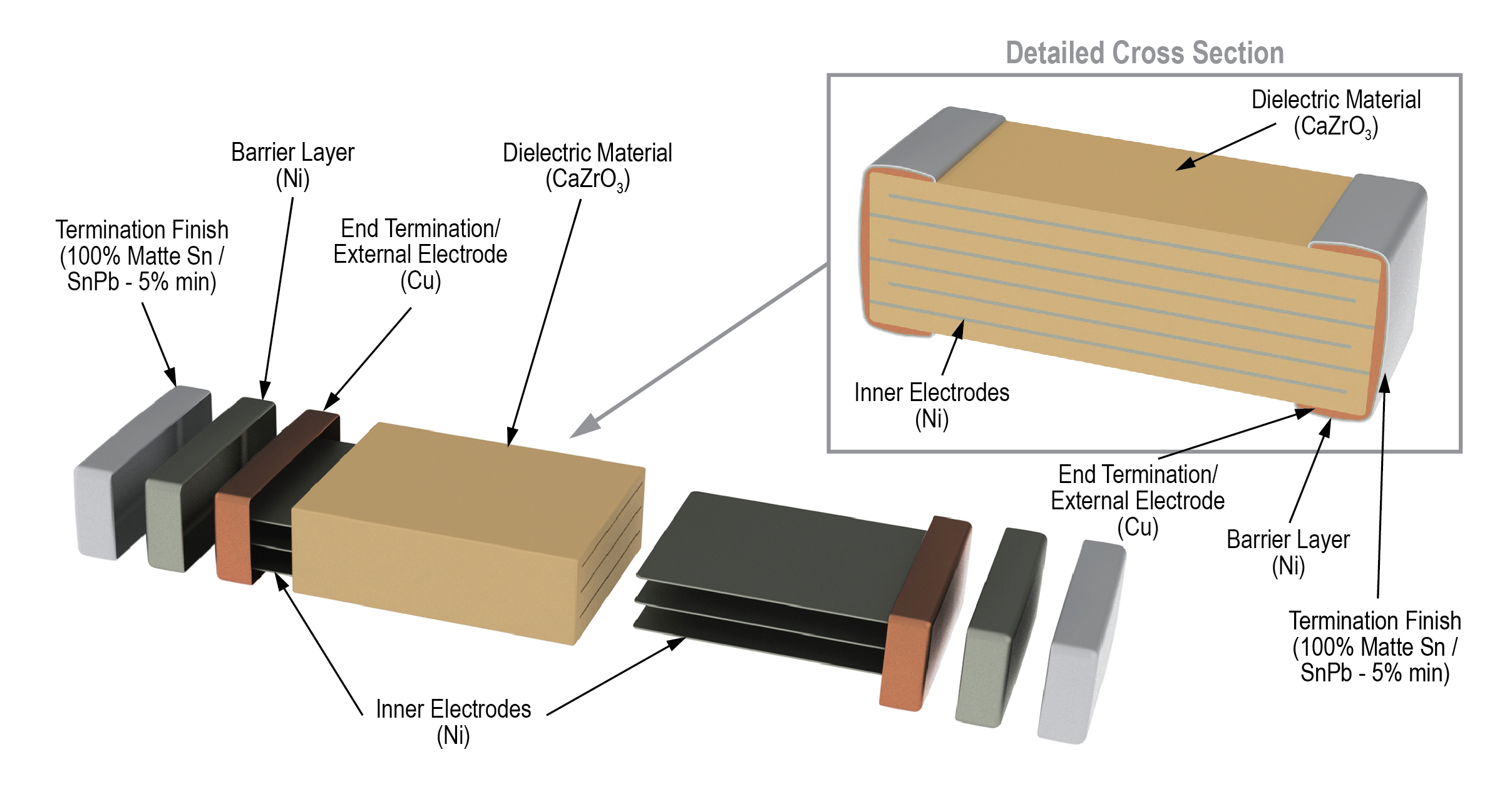
Capacitor lifetime depends on the materials

Although not all applications are safety critical or mission critical, reliability is still a vital consideration for many electronic products. Making informed choices at the part selection stage can help ensure the product will perform correctly over its intended lifetime.

When choosing capacitors, properties such as volumetric efficiency, frequency stability, temperature rating or equivalent series resistance are often the primary factors that govern technology choice. In these cases, understanding factors affecting lifetime can help engineers make sure the product will deliver the required reliability.

On the other hand, a long operational life may be an essential requirement of the end product.

Continue Reading the full article, “Capacitor reliability can be improved with the right materials,” on Electronics Weekly.

Karl and Corey run The Spark Gap Podcast which is focused on embedded electronics. On Episode 25 they interview me about Capacitors. We covered all the major types of caps, plus some application bits. Check out their show notes for an impressive array of links on the subject.

Also, my favorite episode of theirs so far is episode 18.  The guys talk about different serial protocols like SPI, I2C, CAN, etc.  Really good stuff.

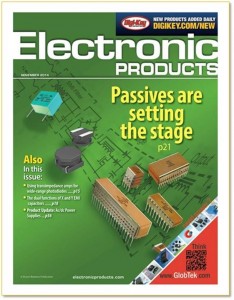
Understanding what X2 or Y1 capacitors actually are and are not is important when designing them into an AC-mains connected power supply.  Recently Electronic Products Magazine ran an article I wrote on the proper role of X and Y safety rated EMI Capacitors.

The X2 capacitor rating means different things to different people–except for UL.  When I wrote this article to discuss some common misconceptions around what X2 Rated Capacitors are, and how they can be properly used.

In case the PDF reader doesn’t load, it’s on Page 20 of the November 2014 issue.

You can see the full article with the EP Reader, by clicking here.

Article I wrote on some innovations KEMET has implemented in their capacitors:

There is no Moore’s Law for passive components like capacitors, but relentless development is delivering the kinds of devices engineers need to deliver cutting-edge new products for modern living. Capacitors have for many years enabled electronic designers to manage energy within circuits and fulfill basic functions like filtering noise or harmonics, correcting power factor, stabilizing feedback circuitry, coupling/decoupling, interfacing between voltage levels, and storing energy. But the demands placed on these components continue to increase, as electronic devices are expected to be smaller, longer lasting, more feature rich and more robust.

Read “Capacitor Innovations Address Emerging Opportunities” on Power Systems Design.