Category

Workbench Wednesdays

Category

The TENMA 72-2660 portable power supply offers bench supply capability in a backpack-friendly package. The single output is capable of 45 watts with up to 30 volts and 3.75 amps out. The built-in USB ports offer an easy way to power 5 Volts Arduino or Raspberry Pi projects while limiting their current. See how this portable supply performs, the things the Bald Engineer likes about it, and the points to consider before buying
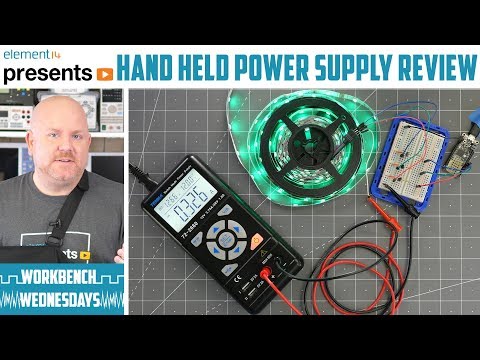
This $100 power supply, model number 72-2660, is cool. It’s about the size of a digital multimeter but can output 45 Watts. Both voltage and current are adjustable. It can output up to 30 volts and 3.75 amps, but not at the same time. It does have a flaw in its design though. Fortunately, I was able to find and apply a fix for it. Overall, if you want a portable adjustable supply, this one is worth checking out.

If you are new to bench or lab power supplies, check out this bench power supply basics video.

To answer a common question: yes, I did injure my shoulder. Right before shooting the A-Roll, the parts with me on camera, I tripped. As I went to catch myself falling, I tore two of the muscles in my shoulder. It took about 6 weeks to completely heal. Yuck!

Show notes on element14
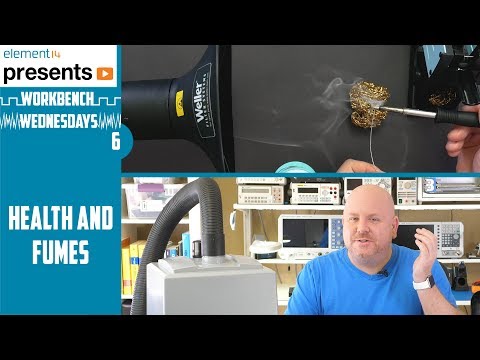
An overlooked danger of electronics soldering is the fumes. While the smell and smoke may not be pleasant, the chemicals in the fumes can be harmful. Is solder made with lead(Pb) your only concern? Learn about where lead-free solder came from, what different flux types mean, and two ways to keep your air (and your lungs clean.)

In the video, I show a cheap “smoke eater” and a professional fume extractor. There is a cost difference of $50 and $700 between the two. However, either is better than having nothing.

Ask Questions on element14

In this element14 Workbench Wednesdays episode, I review tools provided by Weller which are suitable for surface mount soldering. Throughout the soldering series, I have been using mini-projects to see how the gear works. Making this particular video was special to me. The subject was a TI-85. Back when I was a kid, one of my first soldering projects was to replace a capacitor in the TI-85. At the time, all I knew is that the change would make it run faster. I didn’t know why I just knew it worked.

Today, I now know that capacitor was part of an RC oscillator for the Z80 CPU. It clocked the processor. By putting in a lower value, such as 2.2 or 4.7 pF, the calculator would speed up. The trade-off, of course, is that it means the batteries drain faster! But hey, before someone created Zshell, this was the only way to make Breakout run fast.

Of course, the focus of the episode is the gear from Weller. So please, hit-up element14 and check that stuff out. You can also find the polls I mention at the end of the video there.

Watch, Comment, and Vote on element14

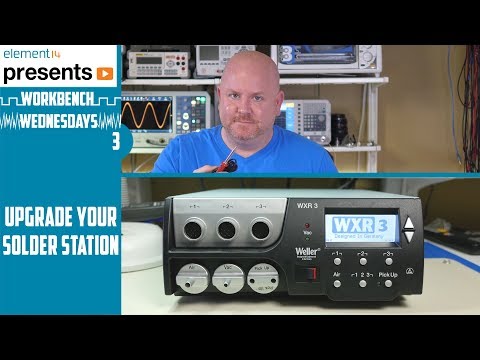
Right after the digital multimeter, or DMM, a soldering iron is a must-have tool for electronics work. Like most tools, there is a vast variety of options available. In this episode of element14’s Workbench Wednesdays, I look at a range of instruments from Weller. They offer everything from a cheap $10 “fire starter” (sorry, it is what we call them!) all the way up to a full-blown surface mount rework station.

Whether you don’t have a soldering iron or you have a  $100 station, this video will show you options to consider when thinking about an upgrade.

After you watch the video, head over to element14 and tell me for you favorite solder tips! (Or your most burning questions!)

Send James your Solder Tips