Category

Blog

Category

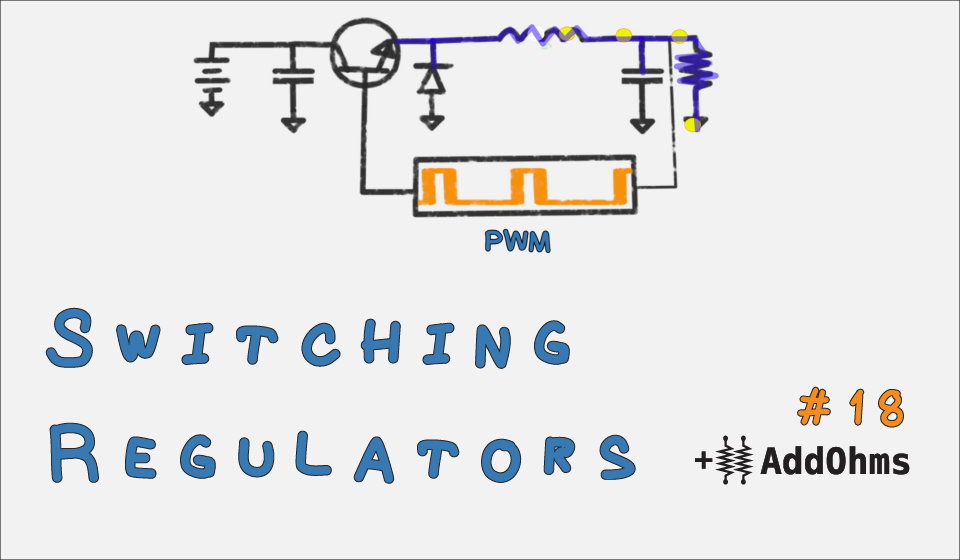
A switching voltage regulator is one of my favorite circuits. In school, they were the first circuits I built where I understood how transistors worked. In fact, they were the first circuit I saw an inductor being useful! Switching regulators are incredibly efficient when designed properly. Of course, this detail about design is important. They are not as simple as a linear regulator, which is basically an IC and two caps.

To understand the basics of a switching regulator, I released AddOhms #18 this week. This is video tutorial dedicated the Switching Voltage Regulator. If video tutorials aren’t your thing, then keep reading for my written tutorial.

This past weekend Arduino fans celebrated Arduino and Genuino Day 2016. In classrooms, maker spaces, and impromptu meet-ups around the world enginerds got together to learn and create with Arduino. At the Jacobs Institute for Design Innovation on Berkeley’s Campus, I first heard that Arduino Create had been launched.

In addition to hands-on learning workshops, there was a display of Arduino/Genuino projects by students. In the afternoon, three Arduino co-founders gave a short talk. David Mellis spoke on Machine Learning. Tom Igoe did his first talk on Technology and Humanities. Lastly, Massimo Banzi talked about IoT.

Arduino Day, Mellis, Igoe, Banzi

Massimo’s IoT discussion related to the earlier announcement that day of Arduino Create. This new platform has a web-based IDE, Arduino Project Hub, and Arduino IoT.

Excited about the announcements, I spent some time with the hackster.io powered Arduino Project Hub and the Arduino IoT.  Here’s my hands-on with Arduino Create.

This week’s post is from my friend John Teel. I asked him to help answer a common question I receive: “How do you make an Arduino project into a product?” His experience as an electronics design engineer and serial entrepreneur is ideal to talk about going from prototype to product. He has developed tech products that sell in the millions of units. John now helps entrepreneurs, startups, makers, and small companies bring new electronic products to market. Check out the company he founded, Predictable Designs, and his free cheat sheet – 18 Steps to Market for Your New Electronic Product after reading his excellent post below.

Dreaming of bringing a new hardware product to market?  Perhaps you think your product will make the world a better place, or maybe you just dream of making millions of dollars.

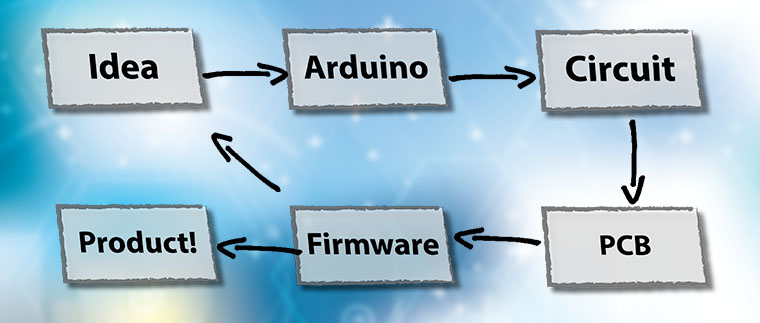
Developing a prototype based on an Arduino (Genuino outside the USA), or other development kit, is a great first step.  But there is still much work to do if you want to make your product into something that can be manufactured in volume and sold to the masses.

So I’m going to break down the process for you into a few manageable steps:

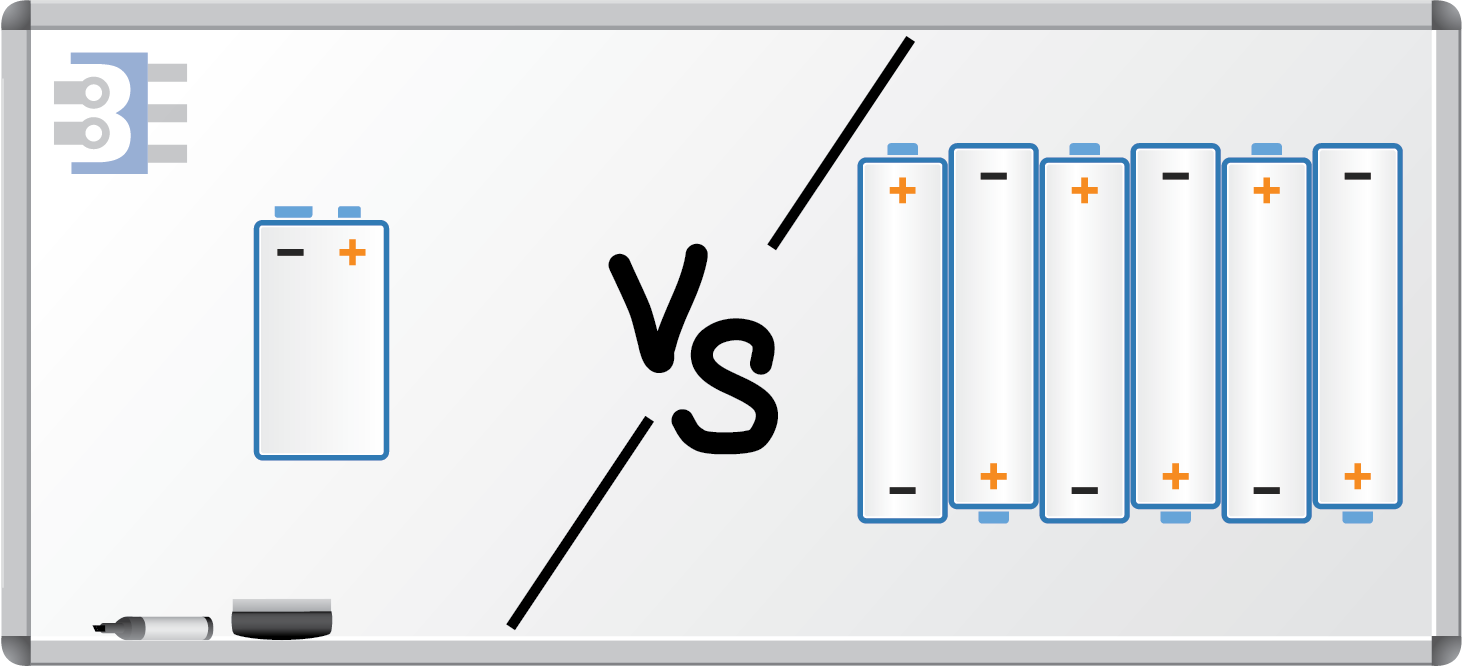
Previously I wrote up why the 9V battery sucks. As I thought more about that post, I realized, I never explained how much energy is in a 9 V battery versus say a couple of AA batteries.

For this post, I am going to break down the energy stored in a 9 V battery, the small rectangular kind and compare it to what you get with 6 AA batteries. Yes, it takes up a little more space, but you might be surprised by the difference.