Author

James Lewis

Browsing

All Arduino boards have GPIO pins with digital and analog capabilities. The Arduino pinMode() function determines how the pins will operate. A surprise might be that in some cases it is not necessary to use it. And when you do, pinMode() may not always work the way you expect. This post outlines how the Arduino pinMode() function works and when you should (or not should) use it.

pinMode(13, OUTPUT);

The fifth episode of AddOhms tackled the difference between AC and DC.  One of the things I wanted to stress in this tutorial is that even though the acronyms stand for “current”, they get used to describe voltages as well.  Which, after a video on the difference between voltage and current, seemed like something that needed to be stated.

No behind the scenes for this one, just the finished video.

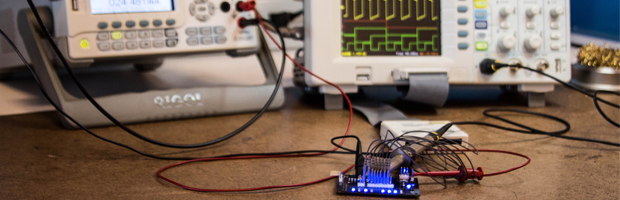
When I teach the Electronics Measurements class at the TechShop in Austin, I take a lot of pride in showing off the Mixed-Signal Oscilloscope.  We have a Rigol DS1102D as well as a standard DSO.  To help illustrate the power of the combined digital and analog channels, I  created a Mixed Signal Oscilloscope Demo Board, based on a counter,  that has an issue that could be turned on or off.  This board is also my first time making use of OSH Park’s PCB service.

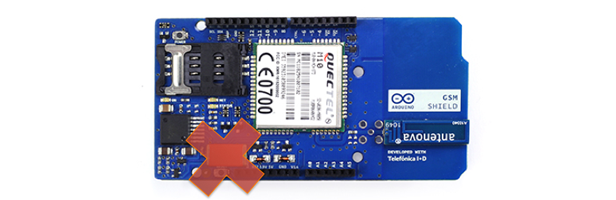
Tantalum is a really misunderstood capacitor. Well, all capacitors are misunderstood, but that’s a subject for another post. I ran across this post on the Arduino forums on the Arduino GSM shield. In the post, ddewaele, reports that the shield blew up, catching fire. At first some might think it was due to abuse by the user. While it is possible that reversing the polarity or applying over-voltage could cause a catastrophic failure, it is also possible that the user doing nothing wrong could result in the same failure mode!

Wait, what? So what gives? Well, there’s two things to understand. First, Tantalum doesn’t explode. It takes almost 2000°C before Tantalum metal will ignite. Okay, so if Tantalum doesn’t explode what is ddawaele seeing? It’s the cathode material, Manganese Dioxide, (MnO2) that is exploding…


The next stage of the reflow oven project is moving to a custom PCB for the controller electronics.  Overall the board is based on the ATmega32u4 with a DS3231 RTC.  The LCD module is intended to be driven by one of Adafruit’s Serial backpacks.  There is an area of LED indicators (something I learned from a previous project) and some extra VCC/GND pins sprinkled about.