Author

James Lewis

Browsing

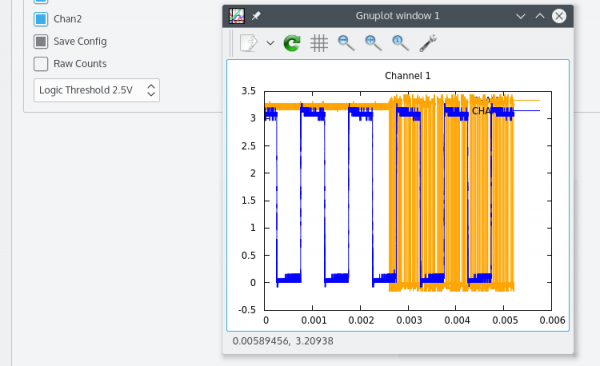
qrigol waveform plot

The Rigol DS1052E digital oscilloscopes are very popular for both hobbyist and professional engineers. These are very affordable scopes that pack a lot of value. Most of the software tools offered from Rigol only run on Windows. Al Williams has fixed that with the the qrigol project on GitHub.

From the readme file:

  • Uses USB communications with Scope
  • Allows keyboard to be unlocked so you can use both the panel and the software
  • Allows easy reading of all measurements as well as logging of all measurements
  • Control of common scope functions
  • Saves waveforms in CSV format
  • Integrates with external plot software like gnuplot to qtiplot
  • Diagnostic mode to send raw commands to scope

There’s a couple of limitations, but I want to draw attention to one. If your region uses a comma (“,”) as a decimal point, you might run into issues. For more information, you might want to check out the qrigol thread on the EEVBlog.

There are two methods to making a prototype PCB: 1) Etch Your Own or 2) Send to a Prototyping Service. While there are many prototyping service options, most cause you to wait anywhere between 24 hours and 30 days before you get your boards back.

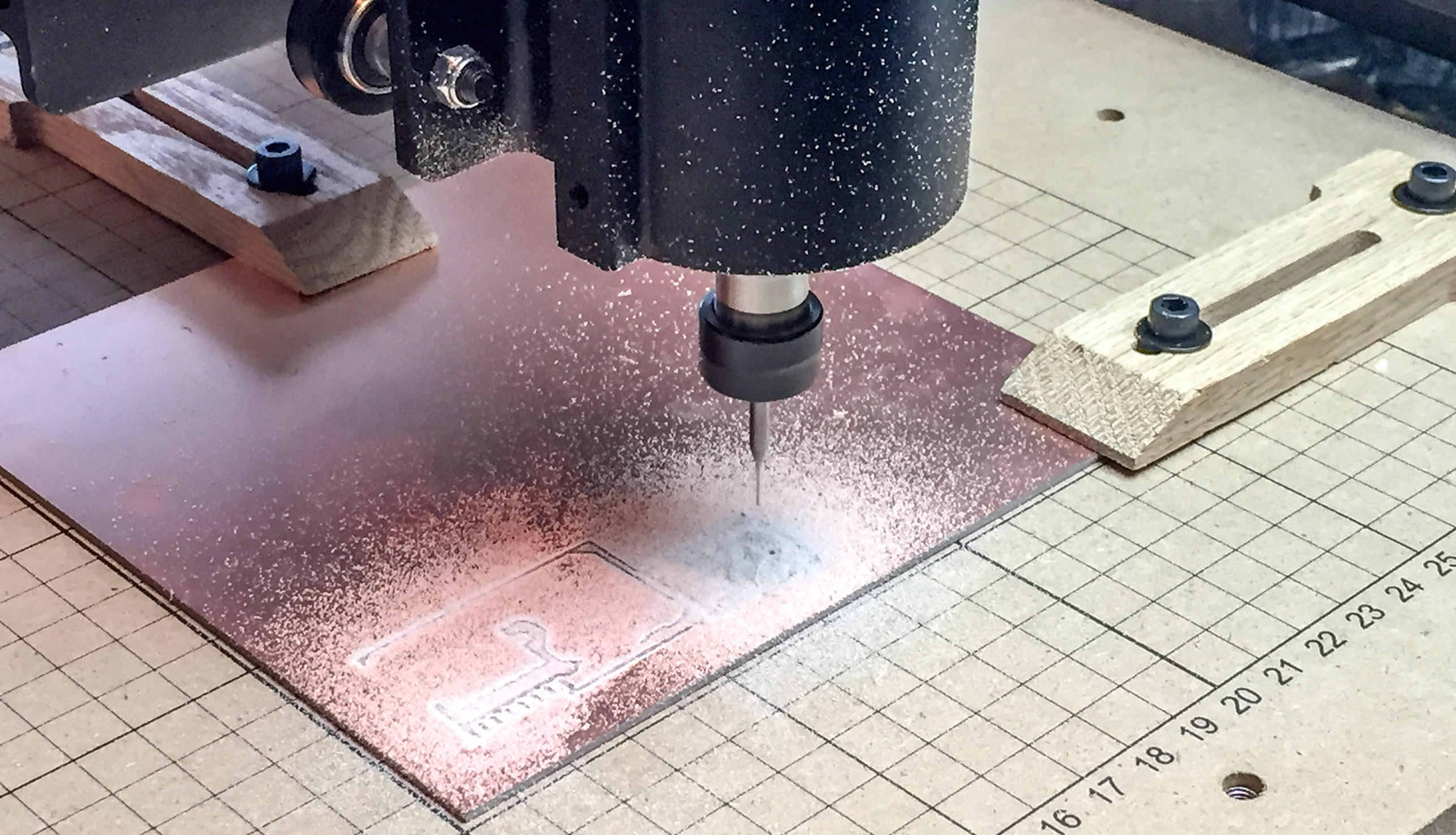
If you need a PCB done today, etching at home is a great option. Chemical etching involves all kinds of steps with all kinds of weird chemicals. If you don’t want your neighbors to think you’re the next Walter White, then mechanical etching is a better option. Which is why I bought an X-Carve from Inventables. It’s a CNC Milling Kit you build yourself.

Keep reading for my X-Carve CNC Review and first-hand experience on etching my first PCB. Plus, lots of pictures!

4 keys to getting electronics help for your project

When describing a person, do you ever use the phrase “their strength is their weakness?” That’s how I feel about Internet forums. The strength of forums is the collective knowledge of like-minded people, some with more experience than others. Sadly, that is also the weakness of Internet forums… Whether it is a topic-specific site like the EEVBlog Forum or an almost anything site like Reddit the strength/weakness holds true.

Lucky for us, most engineering-focus forums are a positive place to ask question and get electronics help.

If you ask better questions, you can get better answers. So, here are  4 proven tips to help ask better questions, when looking for electronics help.

Tutorial on schematics basics

The funny thing about schematics is that they are much easier to draw than they are to read. There are many common circuits. When an experienced engineer looks at them, it’s like a second language. When someone less experienced looks at them, it looks like random lines and symbols thrown together at the last-minute. (Or maybe that’s just the schematics *I* draw.)

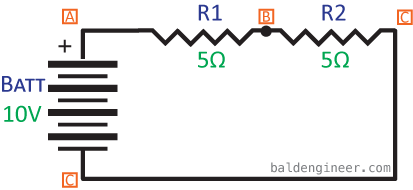
Other than reading Schematic Symbols themselves, one of the basic skill necessary to read a schematic is recognizing series and parallel circuits.

In short if the same current flows through all the parts, they are in series.  While if current has different paths, they are in parallel.  Keep reading to dive into this tutorial on how ohm’s law applies to series and parallel circuits.