Author

James Lewis

Browsing
Download AddOhms Live iCal Reminder

Sunday September 24, 2017, I will host the 2nd live stream of AddOhms. My first live stream was a test for the technology pieces. I’ve made some refinements and am giving it a second try. For that reason, I’m keeping the topic really simple.

The Agenda for the Live Stream is:

  • Introduction
  • News (3 stories or projects that I found interesting)
  • Op Amps with the XL741
  • Q&A
  • Whatever surprises pop-up.

In the livestream, I’ll be talking about inverting and non-inverting circuits  using an op-amp. But I am not going to use just ANY op-amp. I’ll be using the MASSIVE XL741! (I did a review of Evil Mad Scientist Lab’s XL741 in the past.)

Download AddOhms Live iCal Reminder
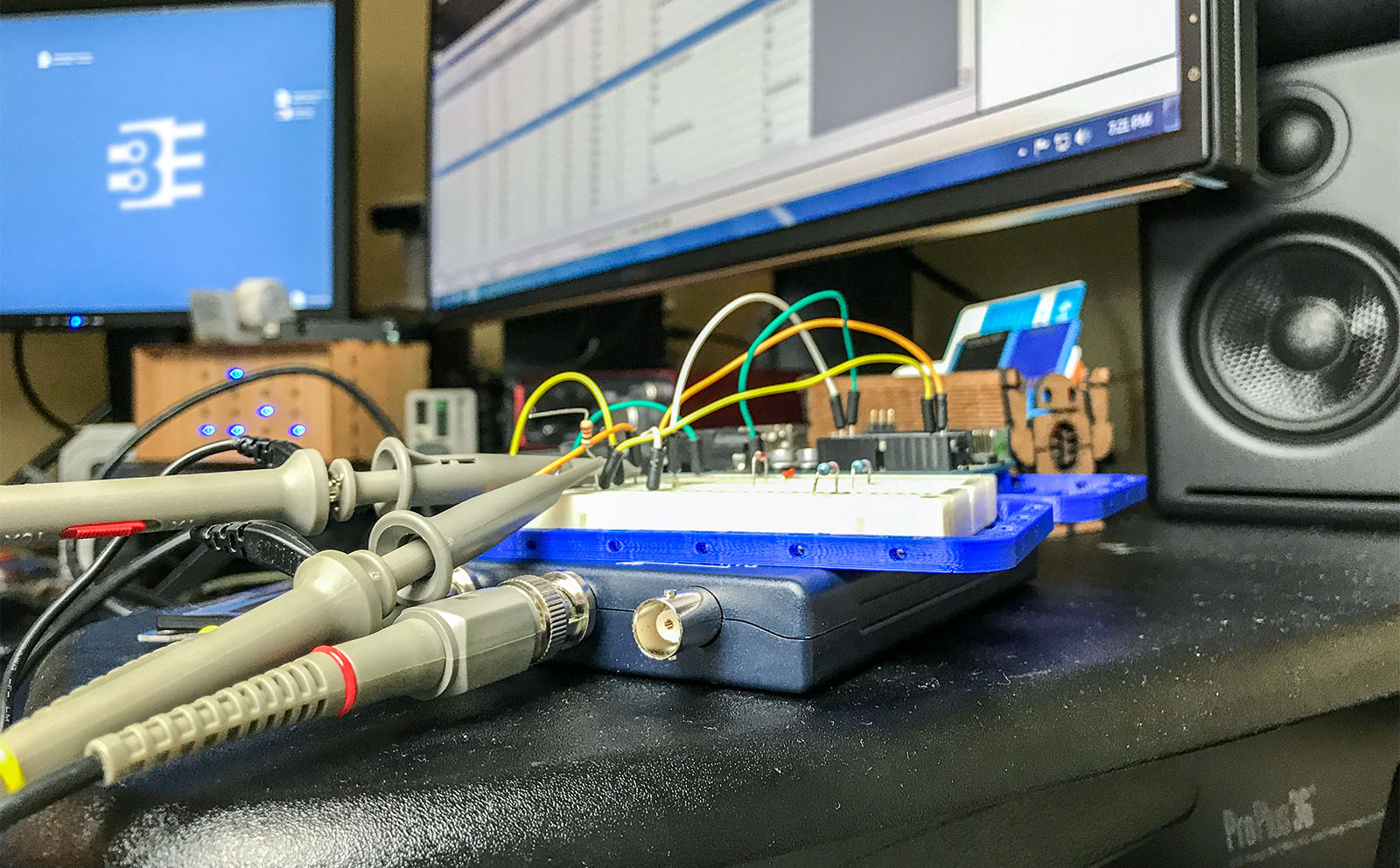
If you need a reason to be an Element 14 member, let me suggest their Road Test program. Companies partner with Element14 to get people to try out their gear. A couple of years ago I got a new microcontroller board. This week I received a new test instrument. Here’s my hands-on Picoscope 2204 review.

The scope is bus powered. With the BNCs and type-B USB connector, it is slightly larger than an external USB hard drive. There is not much weight to the device. It does not feel cheap, just lighter than I expected.

Getting the scope up and running is a breeze. Pico Tech included a CD (or DVD?) to install the software, but I could not find my drive to check it out. Software downloads from Pico Tech’s website work great. It looks like you can even download the software and use it in “Demo mode” if you are curious how it works–without purchasing anything.

In this video, I discuss considerations for SSD Capacitors, with a focus on enterprise applications. (No, not the ship kind, the business kind.) As more consumer devices use solid state technology, it gets easier for us to forget the importance of keeping data safe during storage. While solid state drives are more robust than their spinning counterpart, they are not perfect. Just like with spinning drives, there is a small delay from when a write occurs until the data is stored permanently. The highest performance solid state drives parallelize data in a way to minimize this propagation time. However, these drives also keep an active copy of the allocation table in RAM.

Just like the RAM in a PC, when power is lost, so are the contents. So it is critical for a solid state drive to have a reserve bank of energy to dump the RAM contents into permanent storage. Modern drives use huge banks of capacitors to write out any RAM buffers when the system’s rail voltage suddenly disappears.

Learn how to choose Enterprise SSD Capacitors in the EE Journal Chalk Talk.

This video was created in cooperation with KEMET Electronics, Mouser, and EE Journal.

Hey Newsletter Readers: Looking for Best Resistor Sorting Method? My Bad!
Here are some ideas of what you can do with the humble voltage divider. This elementary circuit has a few inventive uses. To be upfront, one of these uses is NOT as a voltage regulator. If you need a voltage regulated, get a voltage regulator! At some point or another, I’ve built all five of these voltage divider circuits. For me, the voltage level shifter is the most common.
  1. Measure Battery Voltage
  2. Signal Level Shifter
  3. Reference Voltage
  4. R-2R Ladder
  5. One Analog Input with Many Buttons

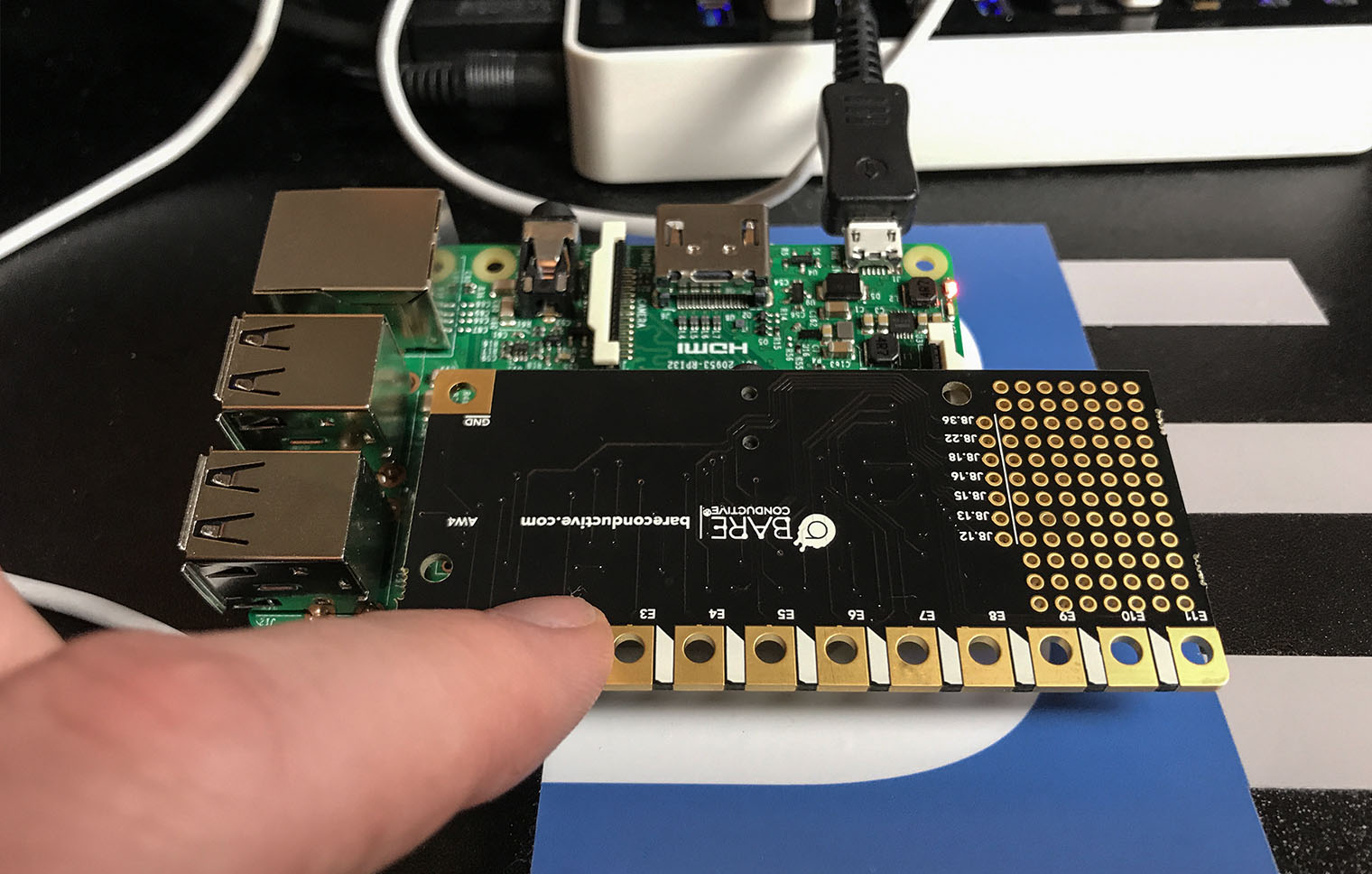
The Pi Cap adds capacitive touch buttons to your Raspberry Pi. Bare Conductive was kind enough to send me one. I do not have a project in mind right now, so here are my first impressions.

What is the Pi Cap?

Arduino tends to call daughter cards shields, while the Raspberry Pi community calls them hats. The Pi Cap is a hat. It plugs into the GPIO header of a Raspberry Pi and provides 13 capacitive touch pads. There is a traditional push button, an LED, and a prototyping area. While the Pi Cap does consume all of the GPIO pins, several are broken out near the GPIO header.