Author

James Lewis

Browsing

high-end-oscilloscopes-evaluation engineering

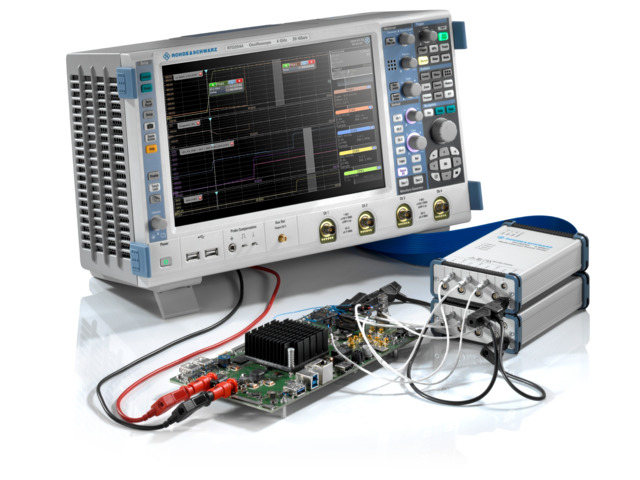
The concept of high end varies depending on what you are talking about and who you talk too. In this Evaluation Engineering Evaluation Engineering article the author discusses high-end oscilloscopes. I am mentioned several times in this article as part of my day job at Rhode and Schwarz. There I am a product manager for oscilloscopes in North America. We have scopes that range from 50 MHz to 8 GHz.

For a little bit of context let me explain how this type of article works. The author, or editor, reaches out to some field experts. Each person is asked to fill out a written interview form. From there the author compiles the responses into a story like this one. This process is always nerve racking to me. I always worry I’ll misquote a specification or make a major typo. I don’t get see the article until it is published.

If you aren’t familiar with high bandwidth oscilloscopes, I think you will still find some value in reading about my favorite test tools.

Read the full article

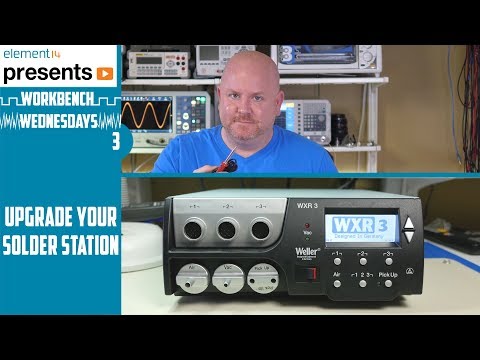
In this element14 Workbench Wednesdays episode, I review tools provided by Weller which are suitable for surface mount soldering. Throughout the soldering series, I have been using mini-projects to see how the gear works. Making this particular video was special to me. The subject was a TI-85. Back when I was a kid, one of my first soldering projects was to replace a capacitor in the TI-85. At the time, all I knew is that the change would make it run faster. I didn’t know why I just knew it worked.

Today, I now know that capacitor was part of an RC oscillator for the Z80 CPU. It clocked the processor. By putting in a lower value, such as 2.2 or 4.7 pF, the calculator would speed up. The trade-off, of course, is that it means the batteries drain faster! But hey, before someone created Zshell, this was the only way to make Breakout run fast.

Of course, the focus of the episode is the gear from Weller. So please, hit-up element14 and check that stuff out. You can also find the polls I mention at the end of the video there.

Watch, Comment, and Vote on element14

If I were a professional actor, I would feel typecast at this point in my career. Whenever someone wants to talk about Arduino, Oscilloscopes or Capacitors, they call me! In this case, element14 asked me to do two videos on how to replace multilayer ceramic capacitors (MLCCs) with Polymers.

Polymers are an interesting capacitor type. What is usually called a “polymer” is better a called a “polymer electrolytic.” The reason for that detail is the word “polymer” describes the cathode layer and not the dielectric.

For more details, why not check out this episode of element14 Presents’ The Learning Circuit! If you have questions about these capacitors, head over to element14 and leave me a comment there.

e14’s TLC #40

Right after the digital multimeter, or DMM, a soldering iron is a must-have tool for electronics work. Like most tools, there is a vast variety of options available. In this episode of element14’s Workbench Wednesdays, I look at a range of instruments from Weller. They offer everything from a cheap $10 “fire starter” (sorry, it is what we call them!) all the way up to a full-blown surface mount rework station.

Whether you don’t have a soldering iron or you have a  $100 station, this video will show you options to consider when thinking about an upgrade.

After you watch the video, head over to element14 and tell me for you favorite solder tips! (Or your most burning questions!)

Send James your Solder Tips

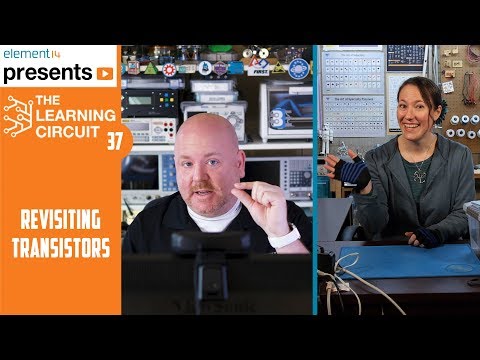
Over on element14, Karen hosts The Learning Circuit. It is a tutorial show geared towards learning STEM basics. So far she has covered subjects like soldering, diodes, and how to make a DIY electromagnet. She did a great job on introducing BJTs and how they work. While I thought she provided a clear explanation of the internal workings, some members of the element14 community still had questions.

She invited me on to revisit BJTs and transistors to (hopefully) clarify the connection between how transistors physically work and how to use them.