The hidden Arduino Macro F() fixes random lock ups
It’s 3am but you are not going to bed until you squash this last bug. You sprinkle Serial.print() statements everywhere you can think of, and then that’s when all hell breaks …
Read More
It’s 3am but you are not going to bed until you squash this last bug. You sprinkle Serial.print() statements everywhere you can think of, and then that’s when all hell breaks …
Read More
The Arduino IDE includes a “Serial Monitor” which is decent for basic serial communication. However, when you need real time serial interaction or data logging capabilities, that’s …
Read More
If you are anything like me, your copy of EAGLE has an extensive list of libraries. Most of them probably came with the installer, some which you have added. This, of course, leads …
Read More
When working on the AddOhms video on the difference between AC and DC, I needed a vector diagram with a sine wave. Using Adobe Illustrator, I tried with a Bézier tool, but it …
Read MoreArduino boards have microcontrollers with notoriously small amounts of RAM. The Uno only has 2,048 bytes of static RAM available for your program to store variables. So when you …
Read More
It isn’t always clear what is meant by calling a device or a signal “analog” and “digital”. This AddOhms tutorial explains the difference between analog and digital by using an …
Read More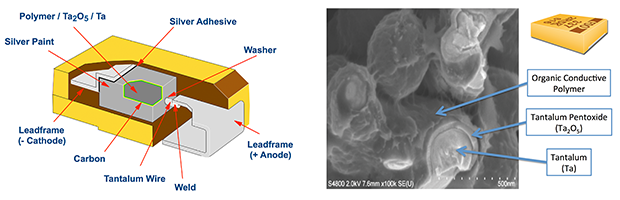
November 2013’s issue of Electronic Products features an article on the cover titled “Introduction to Polymer Capacitors.” The author is, well, me. This article explains the …
Read MoreAll Arduino boards have GPIO pins with digital and analog capabilities. The Arduino pinMode() function determines how the pins will operate. A surprise might be that in some cases …
Read More
The fifth episode of AddOhms tackled the difference between AC and DC. One of the things I wanted to stress in this tutorial is that even though the acronyms stand for “current”, …
Read More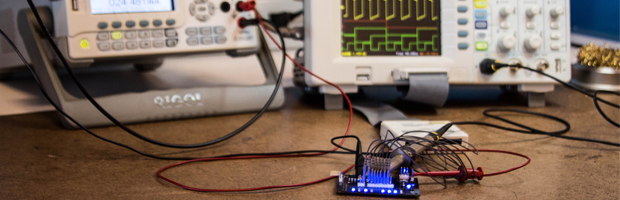
When I teach the Electronics Measurements class at the TechShop in Austin, I take a lot of pride in showing off the Mixed-Signal Oscilloscope. We have a Rigol DS1102D as well as a …
Read More